The cut that fights back
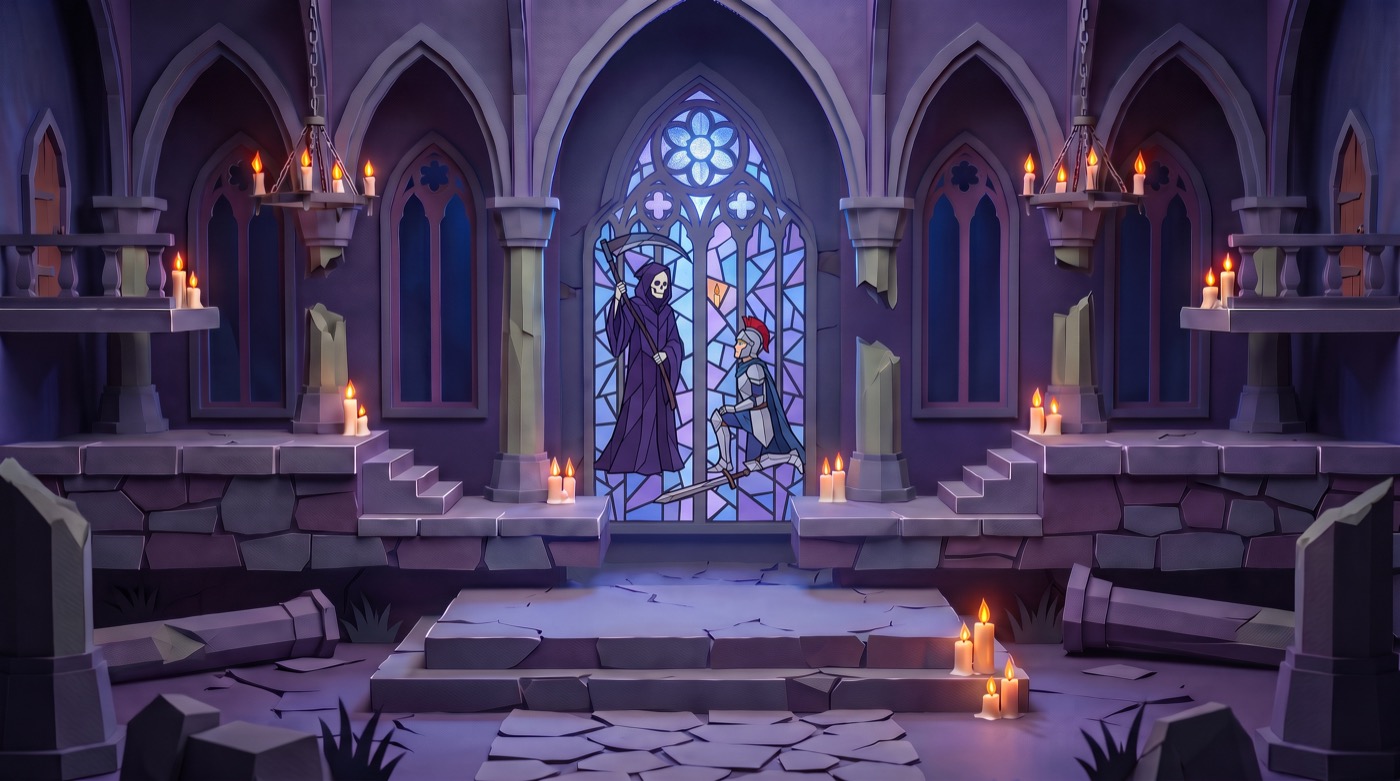
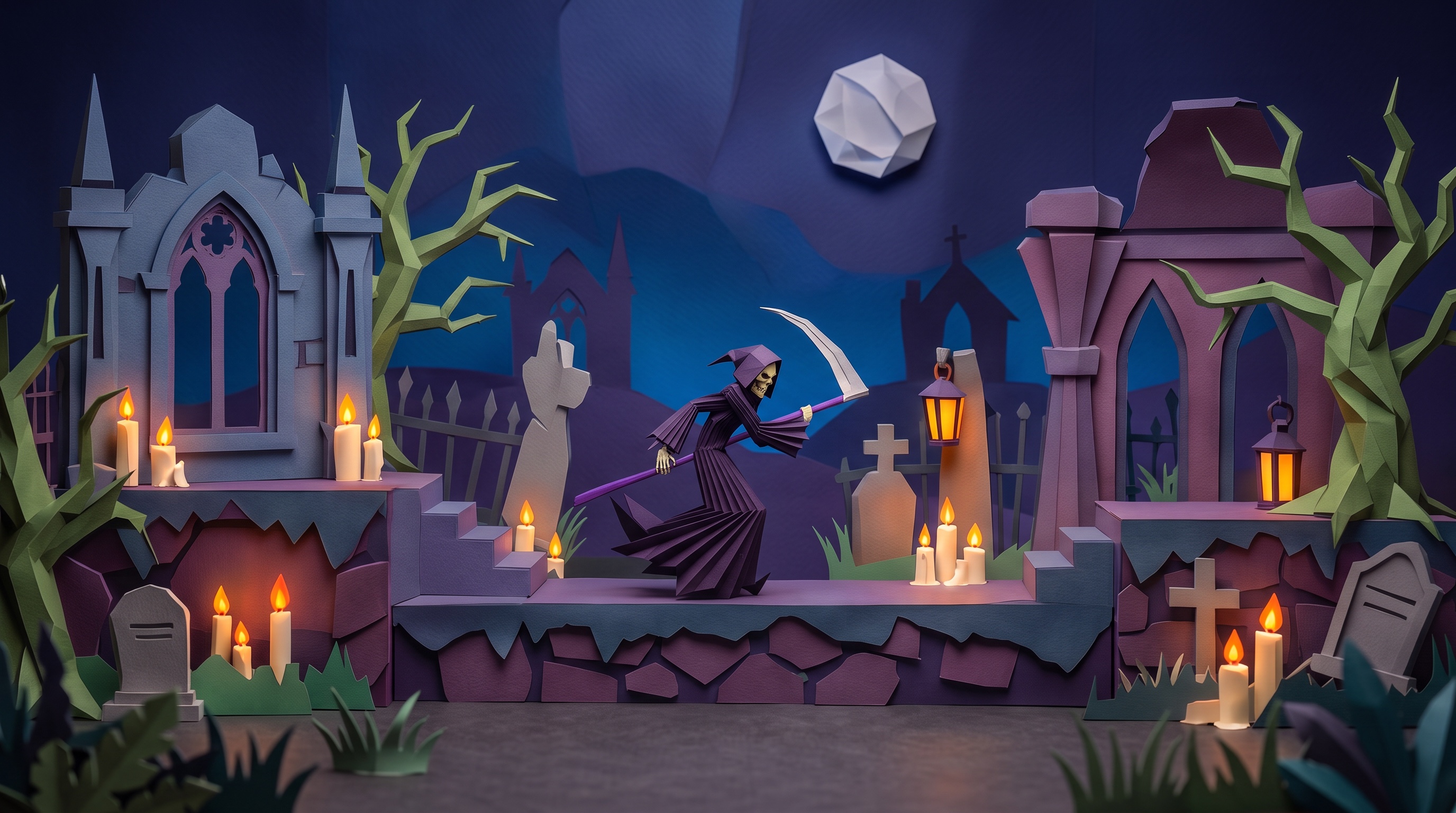
Players hated the ending of Kill Your Darlings: the hero dies. The developer shipped Patch 1.1 to take Death out of the game. You are Death, the ending he cut, running through the sequel he improvises around his hero.
The title flips the writers' rule "kill your darlings". The audience's darling is the hero; the developer's darling is Death, his real ending. The ambiguity is on purpose.
Three rules come before everything else:
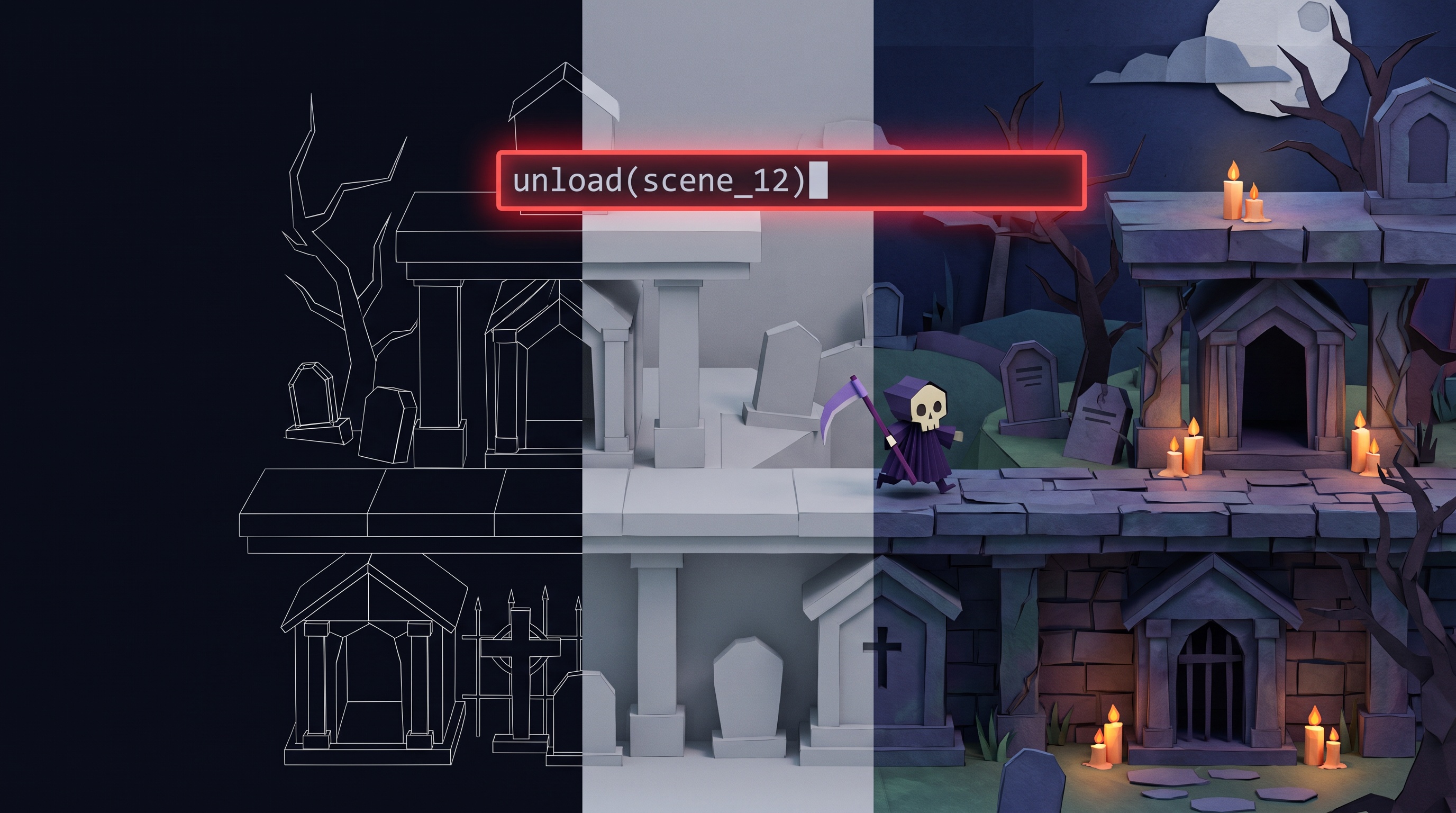
- The fiction is a video game being rewritten. Lines of code, errors, unloaded level pieces, missing textures.
- Paper is the look, not the fiction. It decides how models, colours and light look, never what happens.
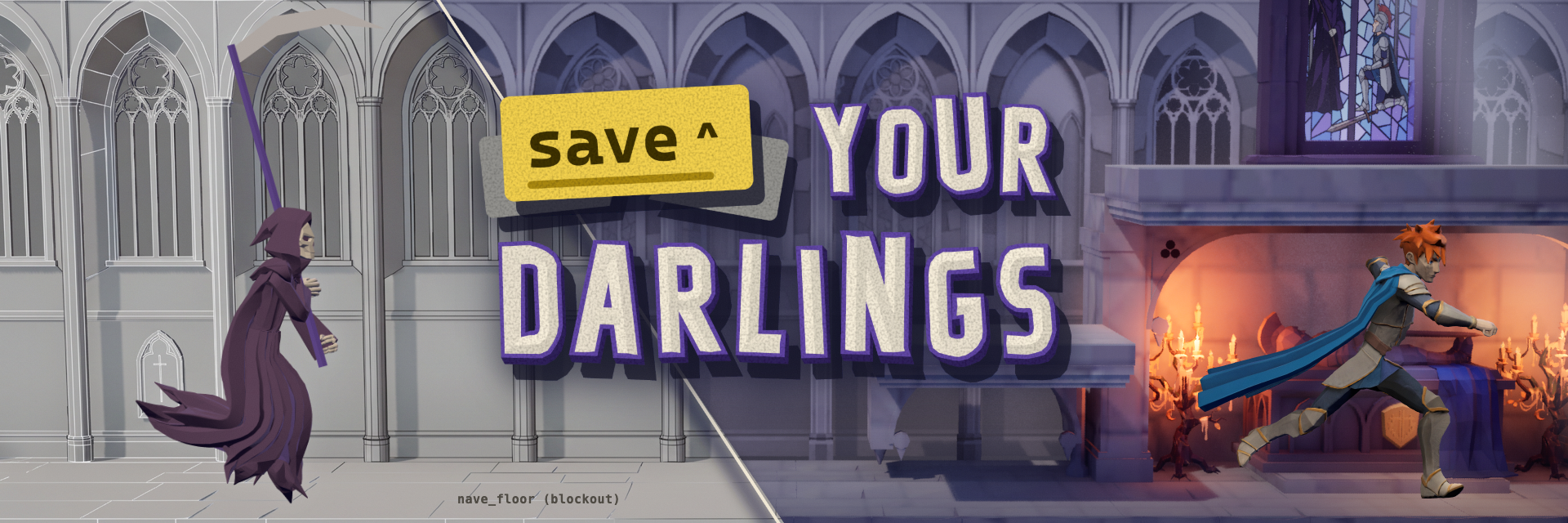
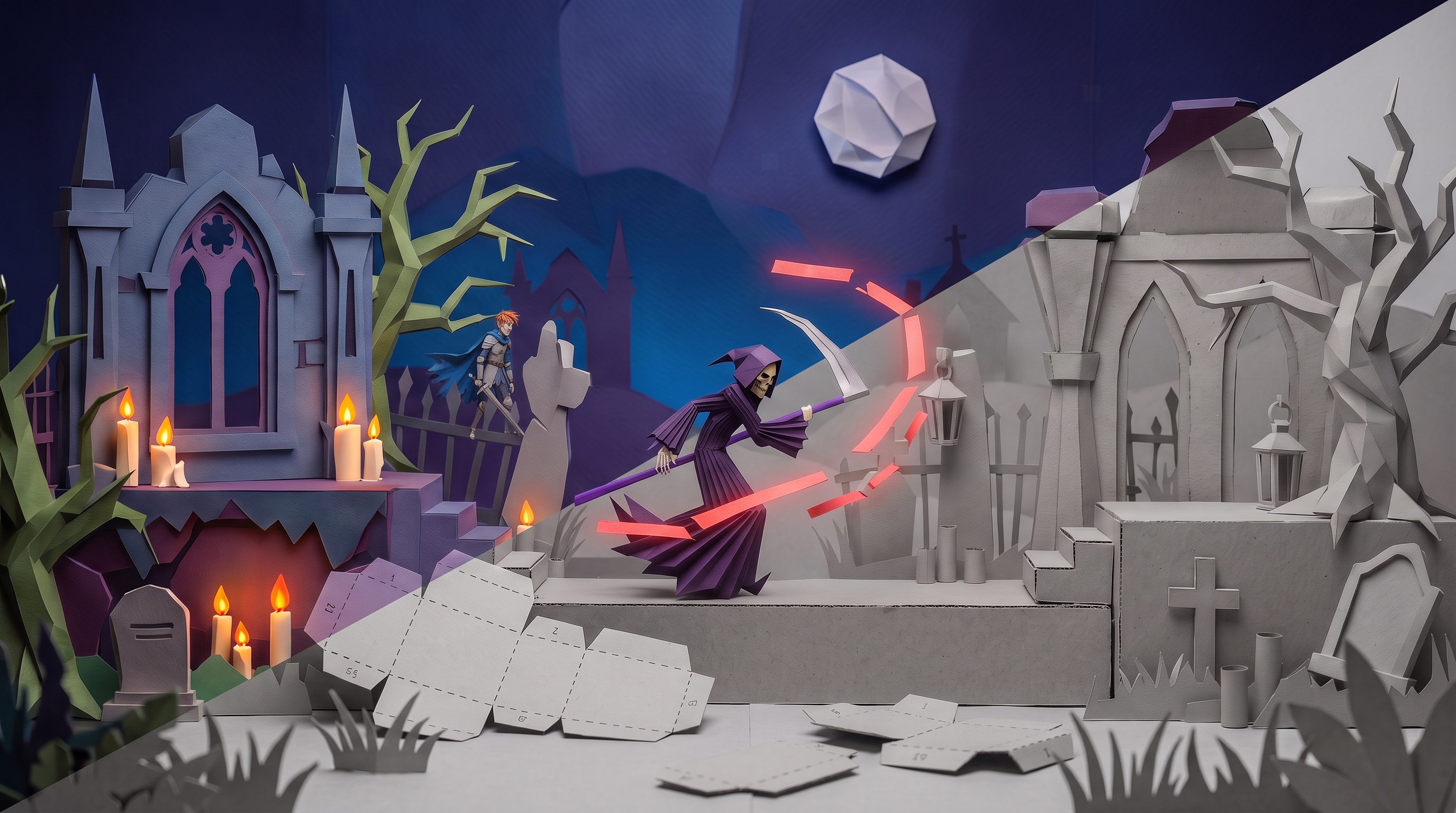
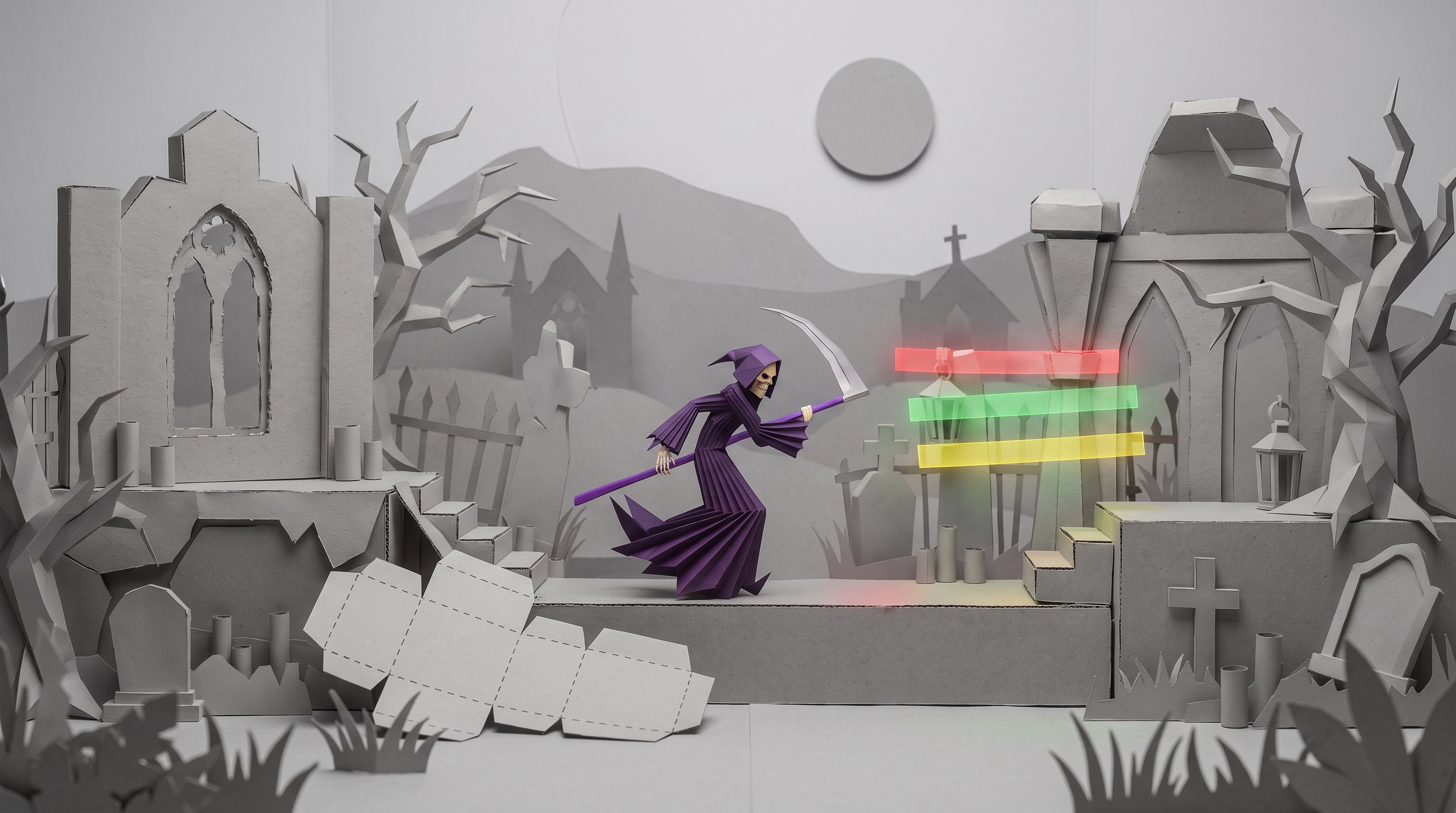
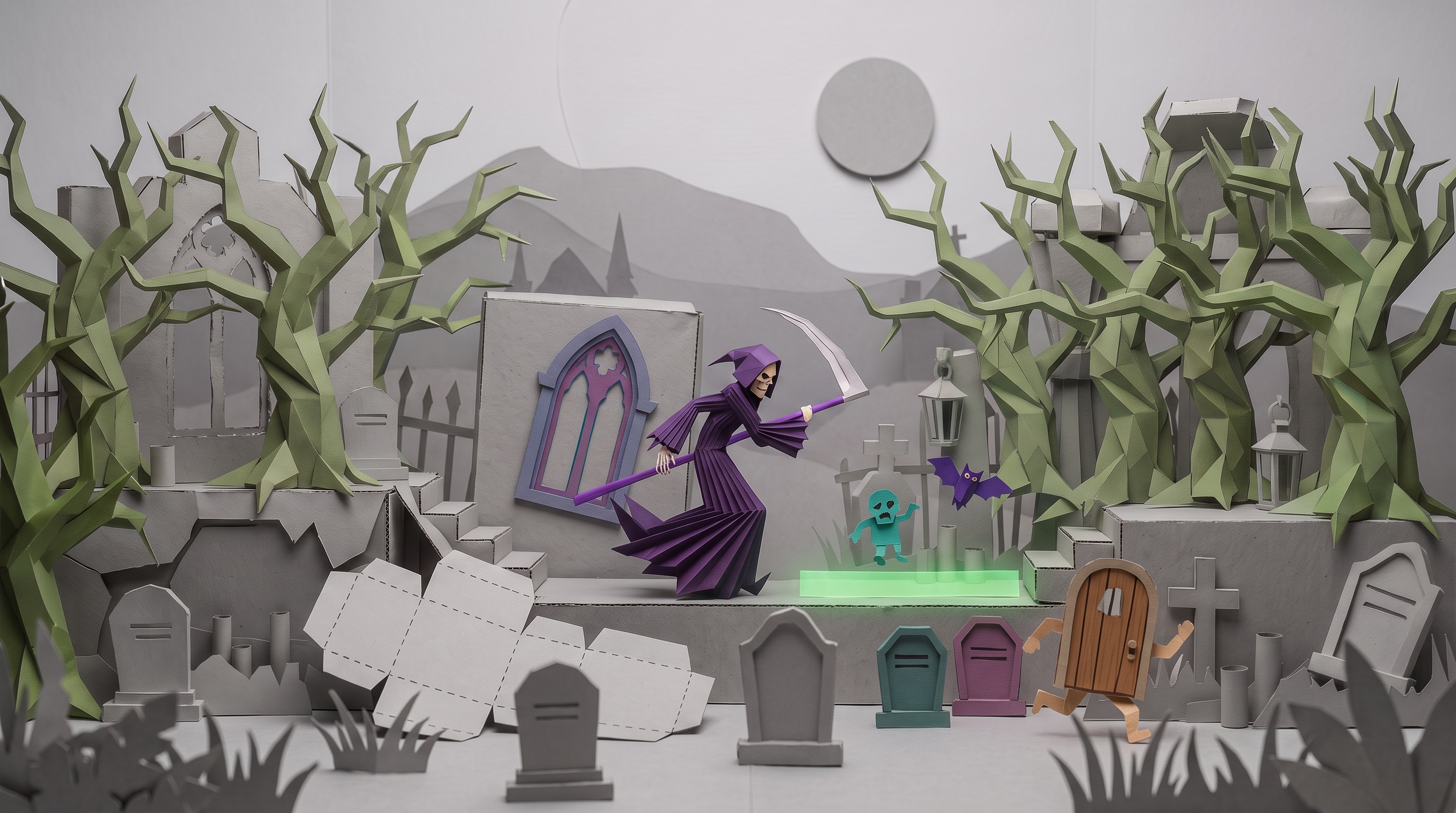
- Two worlds, one cut. The finished dark-fantasy game in coloured paper, and the grey unfinished patch.
Logo
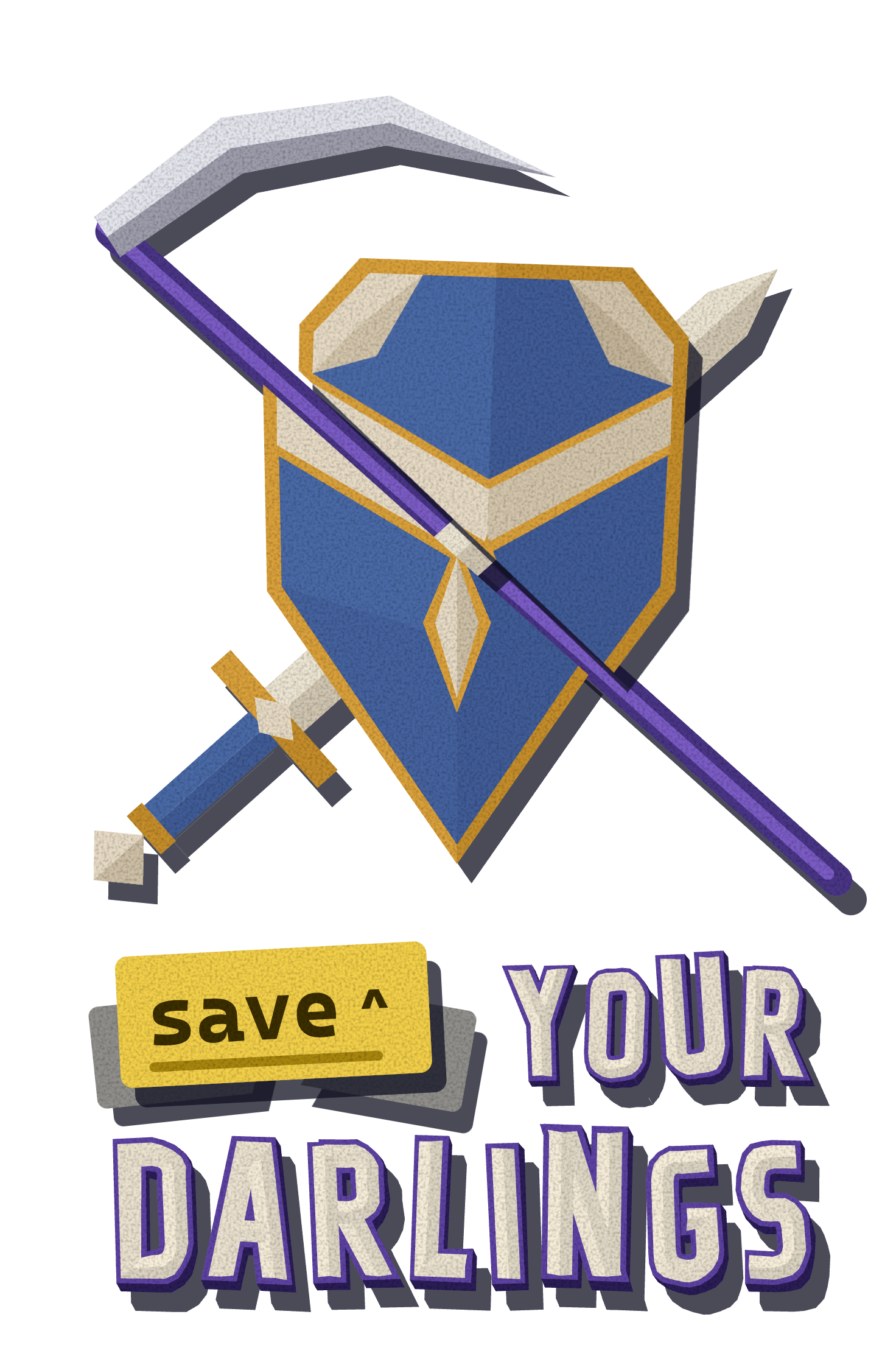
A code line typed over the title: the developer's save in a yellow bar, the scythe cutting the hero's shield. The full logo stacks the emblem over the title; the title works alone when space is wide.
 title · transparenttitle · on ivory
 emblem
 patch · grey version
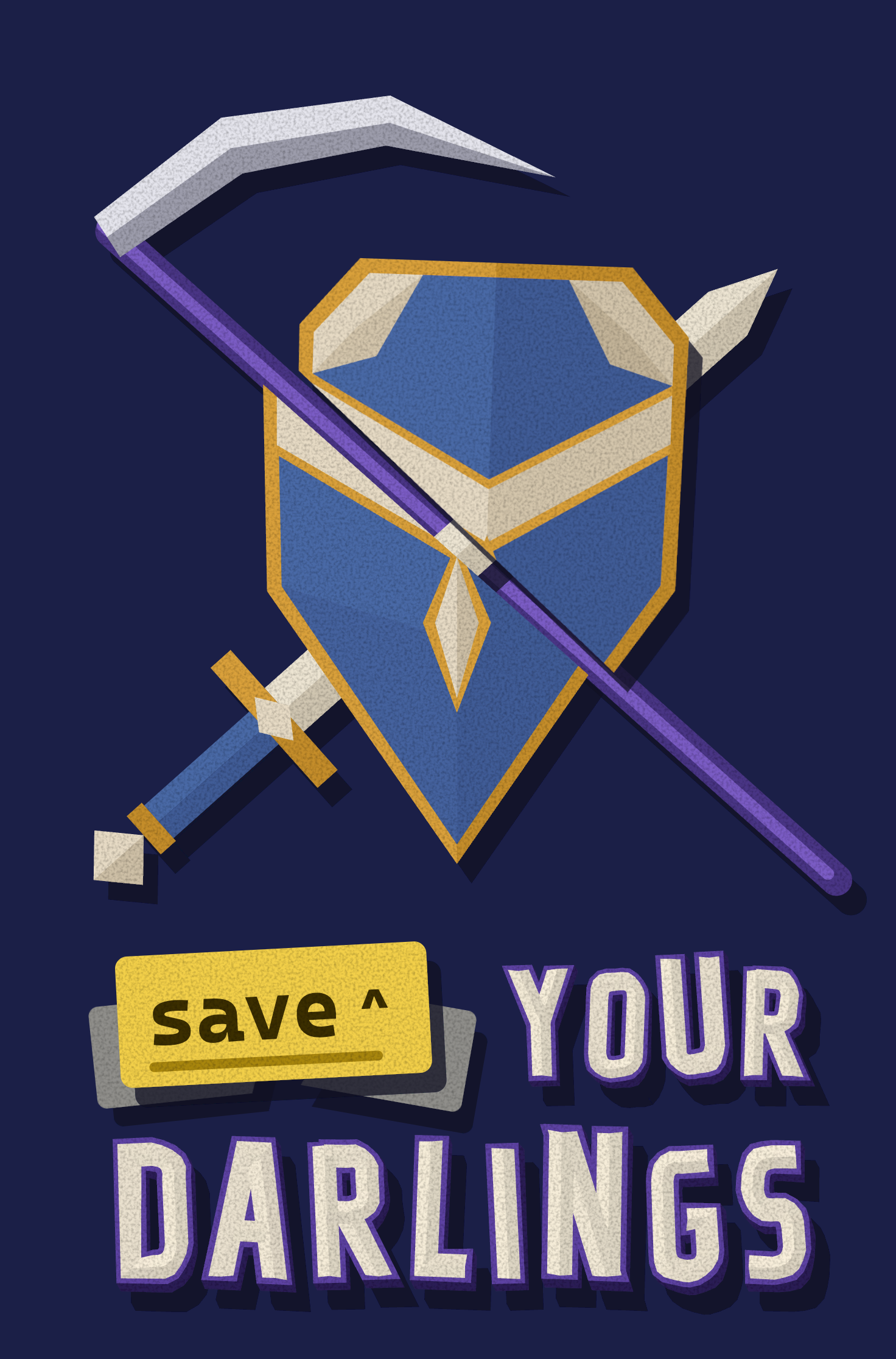 full · on navy
Use it well
- Clear space: the height of the save bar on every side.
- Minimum size: title 240 px wide on screen. Below that, use the emblem or the icon.
- Backgrounds: navy, night, ivory, or a darkened screenshot. On busy images add a soft dark vignette behind it.
- Grey version only for the patch world: menus that are "unloaded", the loading state.
- Don't recolour the letters, stretch the logo, retype the title in another font, or remove the ^ cursor.
Logo, emblem, title font and icons: Gaia with Claude Code, drawn as code (SVG + JavaScript), no image generation.



Typography
Our own font: strips of folded paper, letters tilting one way and the other, the third letter of each word bigger. Titles only.
gravity = off // sorry
Everything the developer types: code lines, HUD, labels on grey blocks, the menu.
Long text outside the game: itch.io page, devlog, this book. Body 18–20 px, Origami Grave from 48 px up.
Colour
Hover a colour to see where it lives, click to copy it. Left: the original game. Right: the patch, where the only colour left is code.
Code lines
The developer never appears: only what he types. Every line is a solid rounded bar in its family colour with a glow, dark monospace text, the ^ cursor at the end and a progress line underneath. While it's being typed, a dashed thread points to what it will change.
Click a line to cut it: the change is undone.
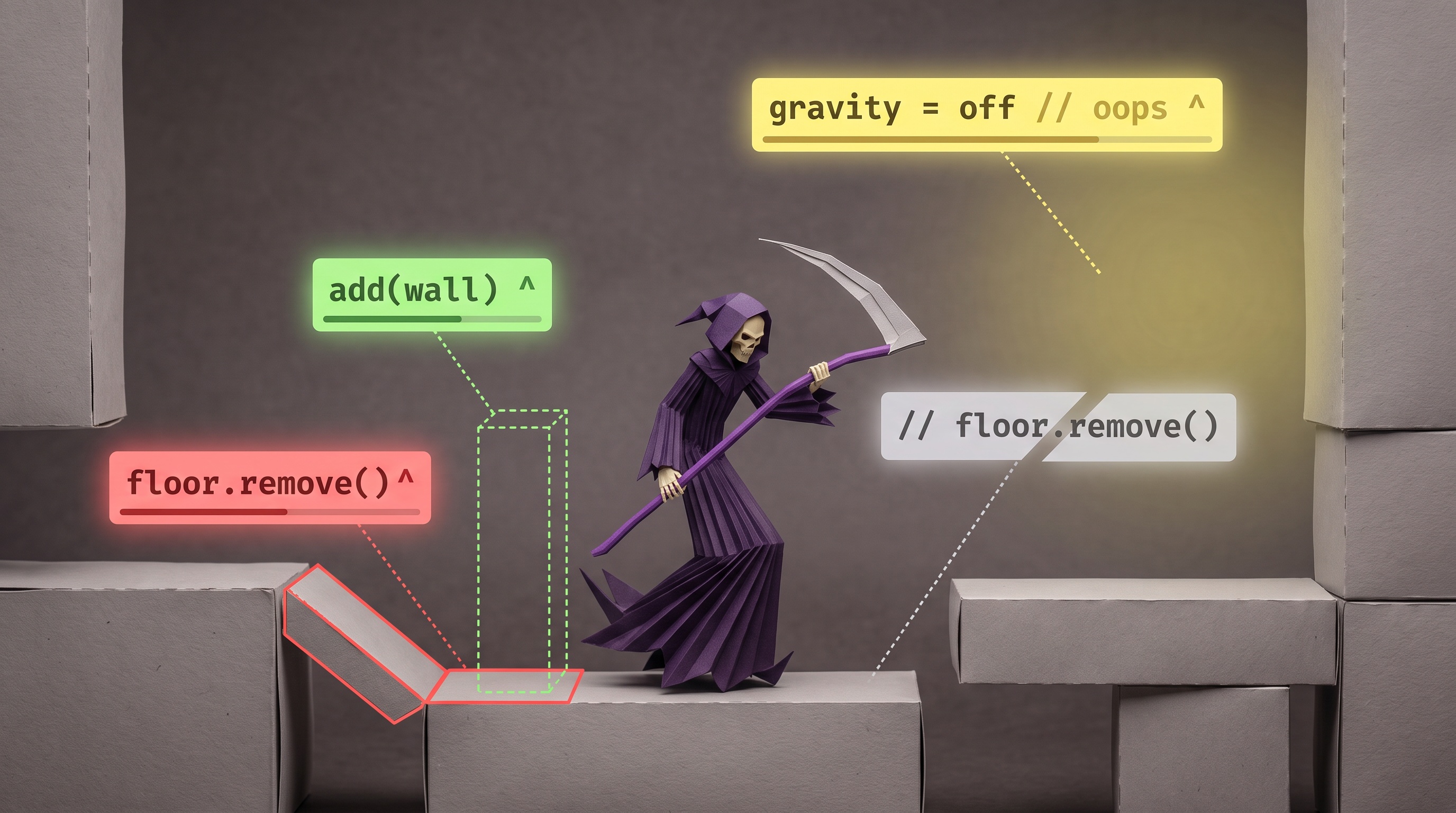
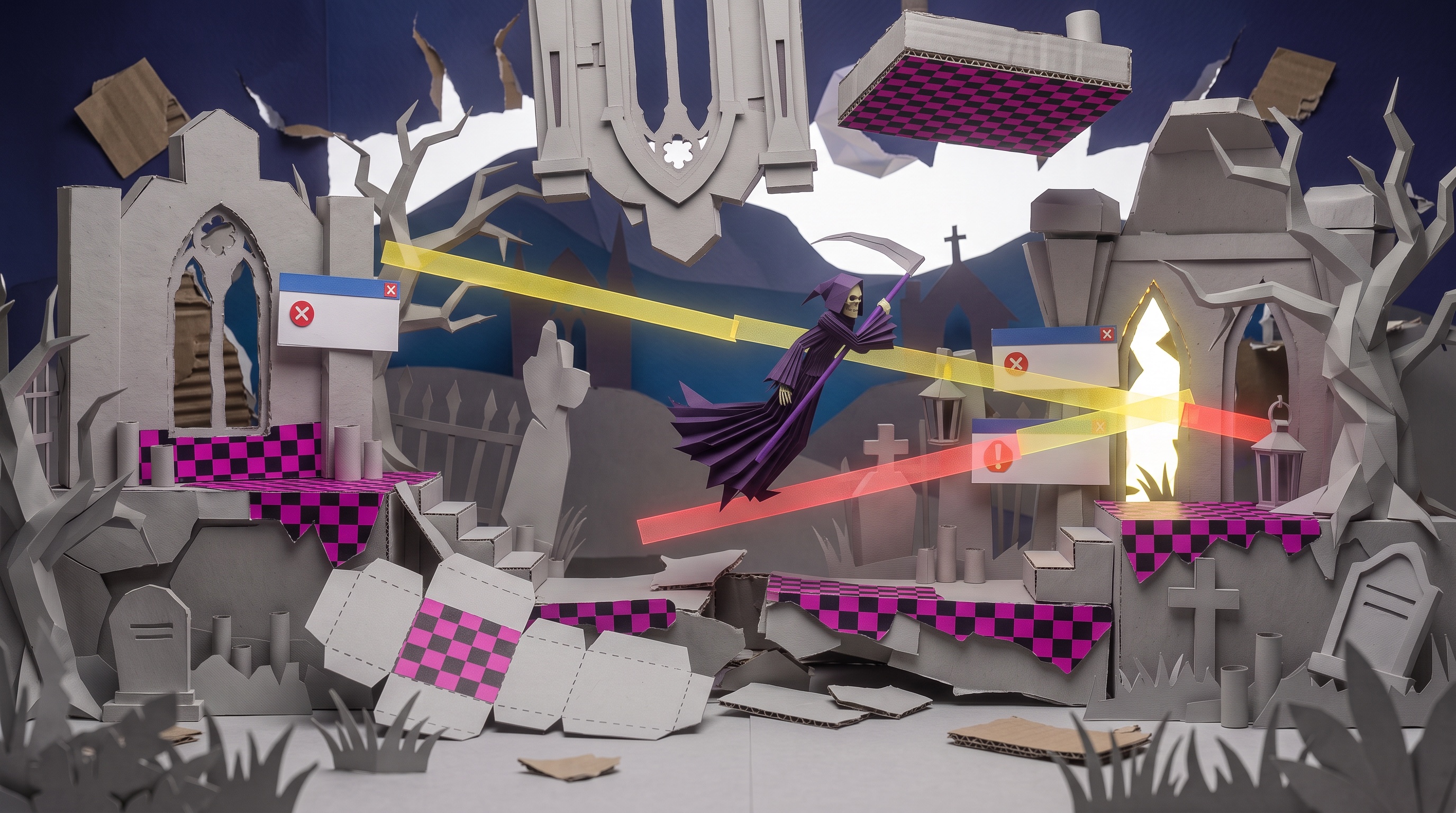
What each line does in game: red removes (the floor unloads: grey, wireframe, gone), green adds (the dashed outline becomes real), yellow changes the rules. Cut a line and its change is undone. Left: mockup 15, the chosen look.
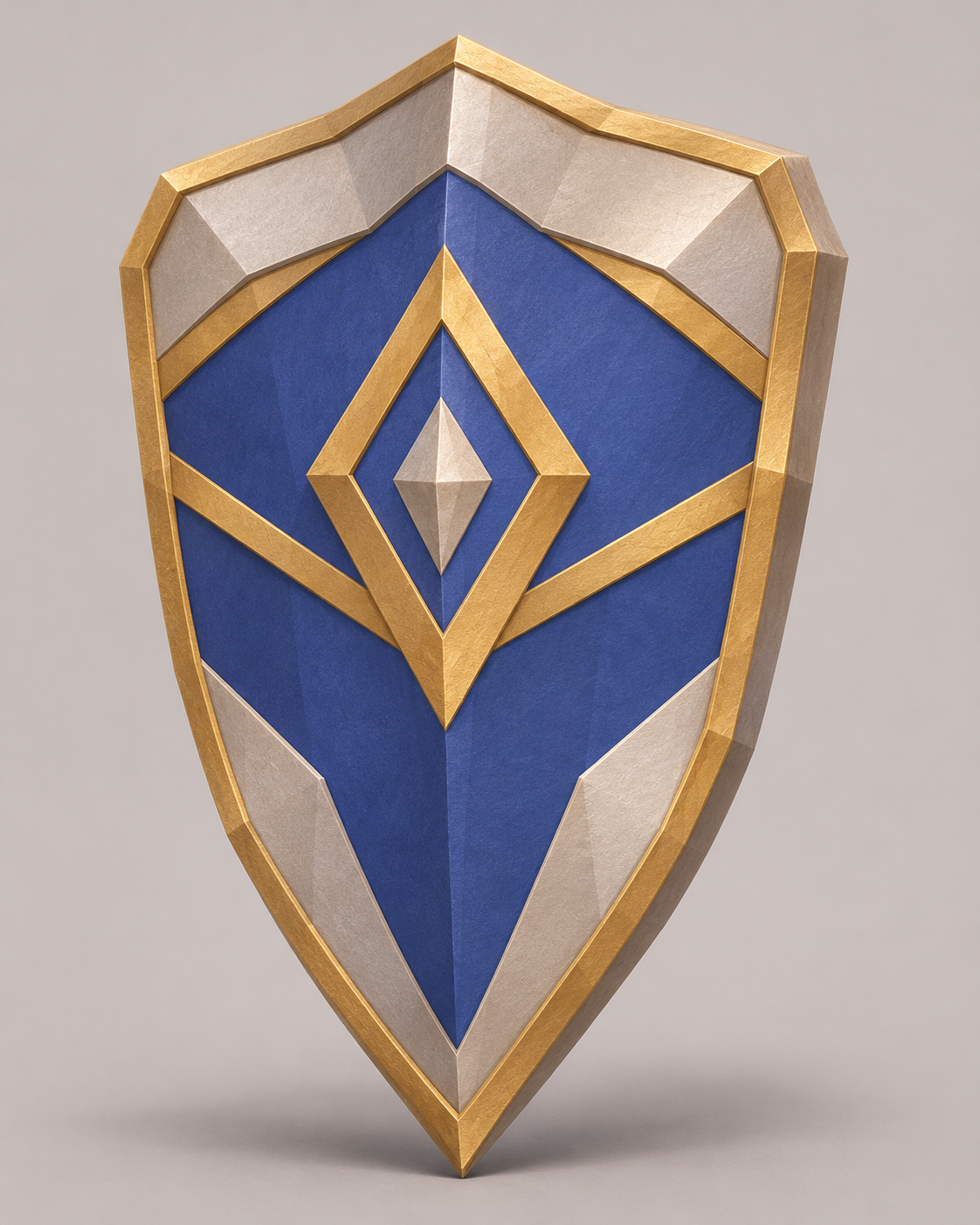
Folded paper, flat faces
Low-poly models with sharp flat faces and one shared paper texture. Backgrounds are flat layered cut-outs with real shadows between layers. Animation is stepped, like paper stop-motion: 12 poses per second.
Expect cardstock, not hand-folded origami: the concepts are more polished than what the engine renders.
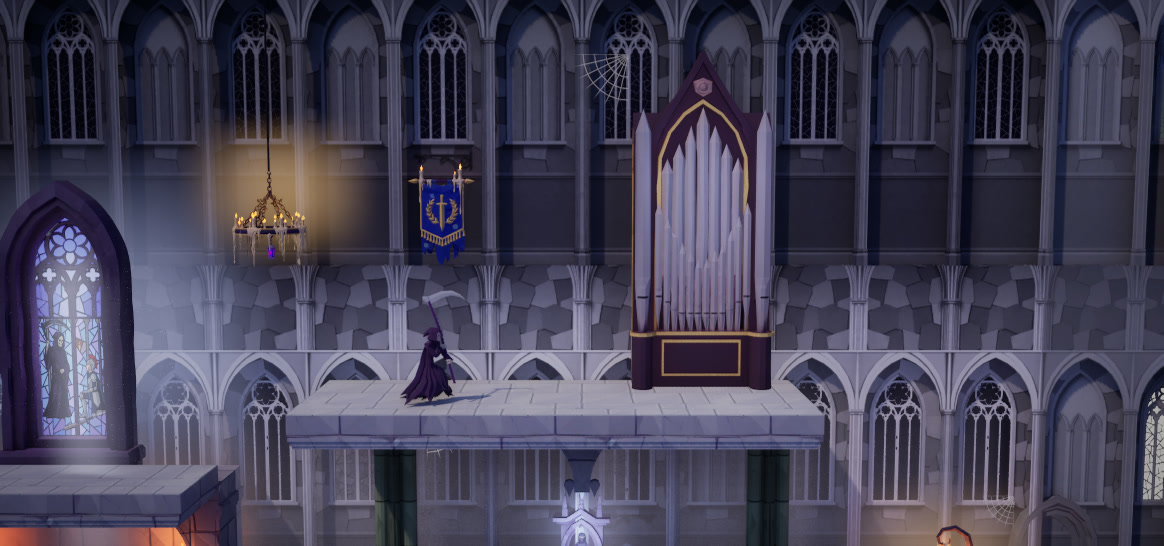
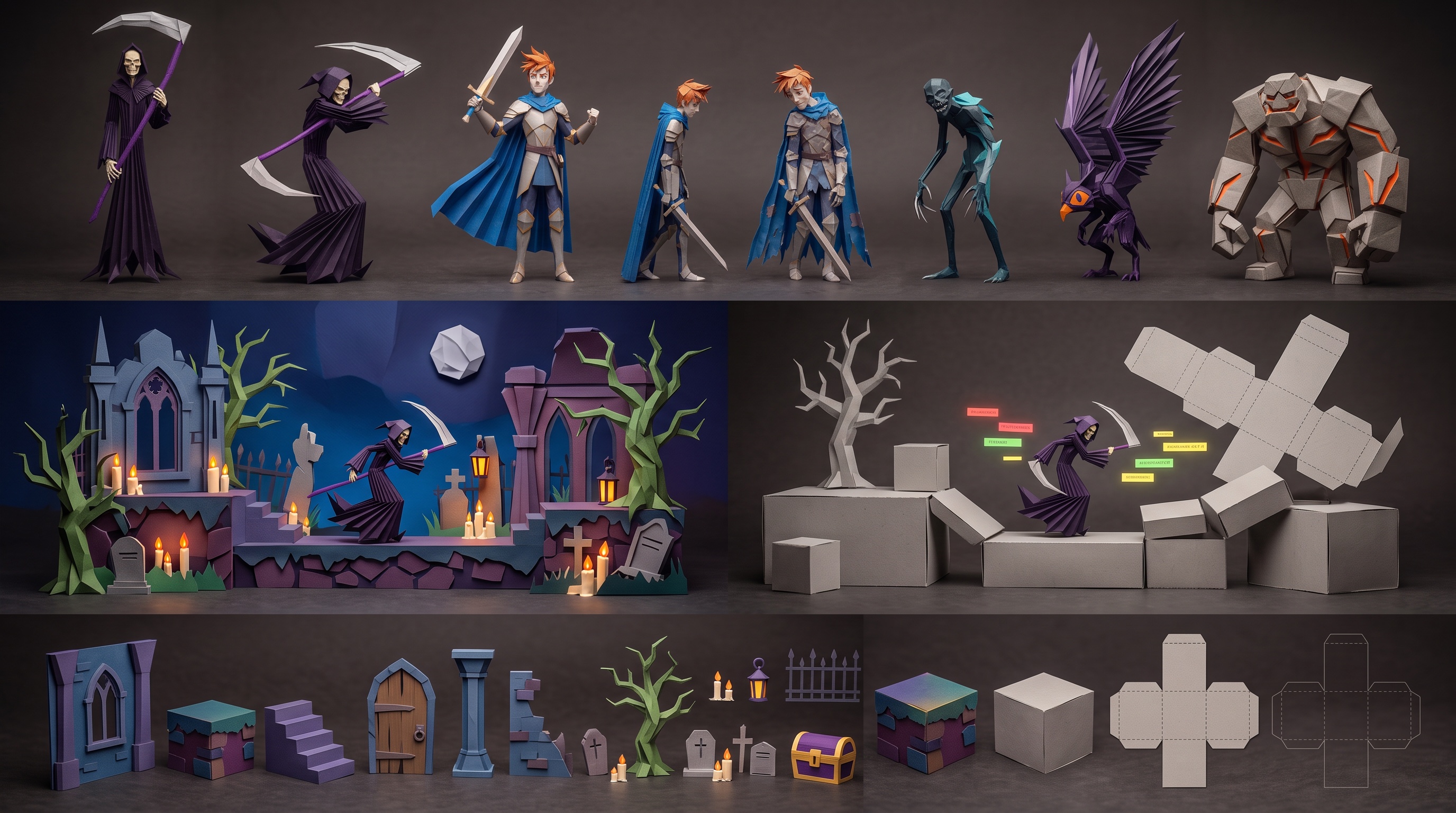
Before and after the patch
Death
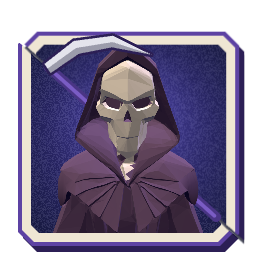
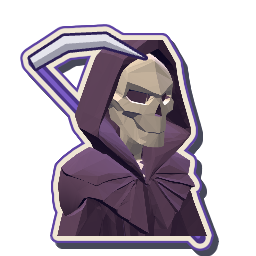
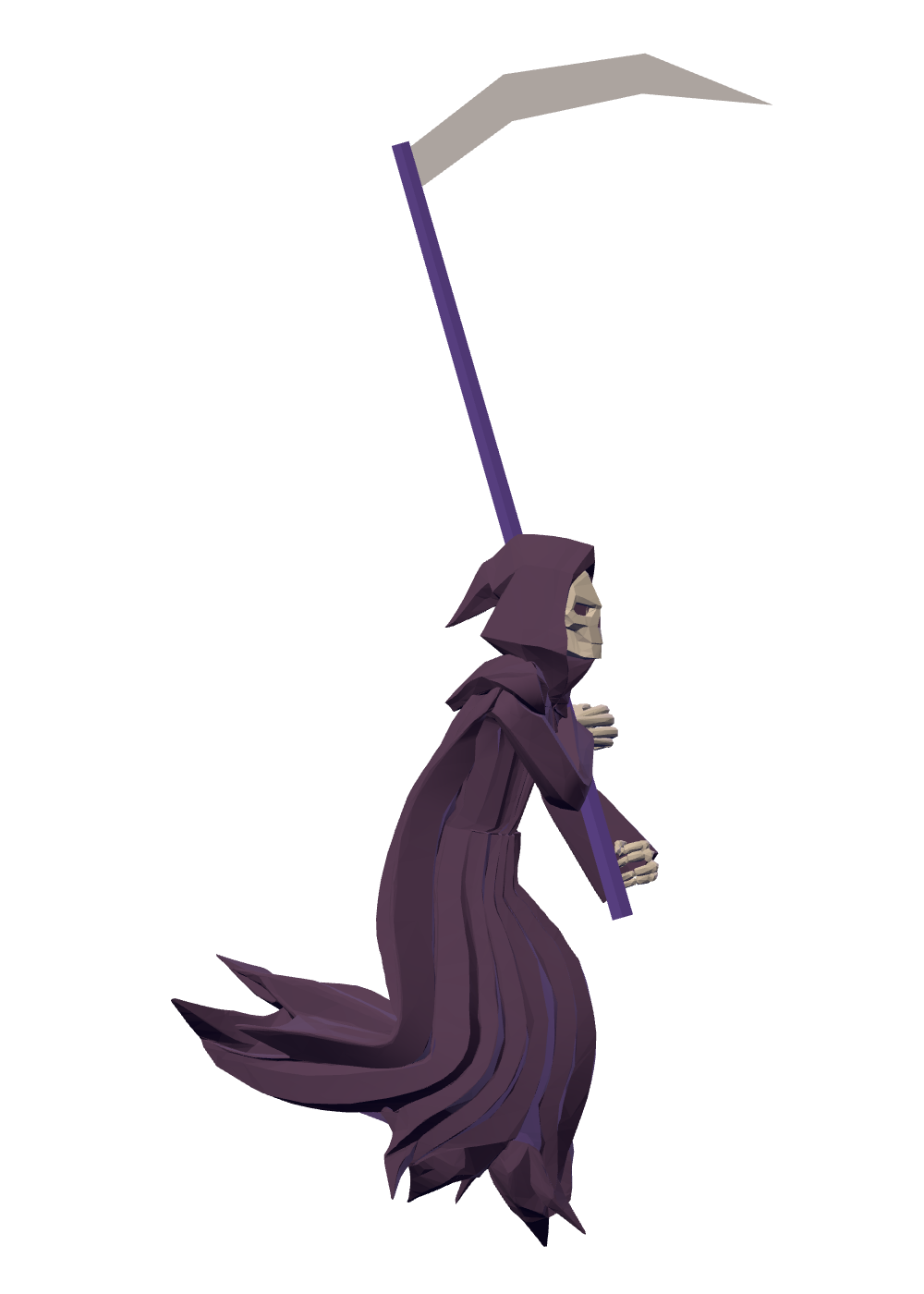
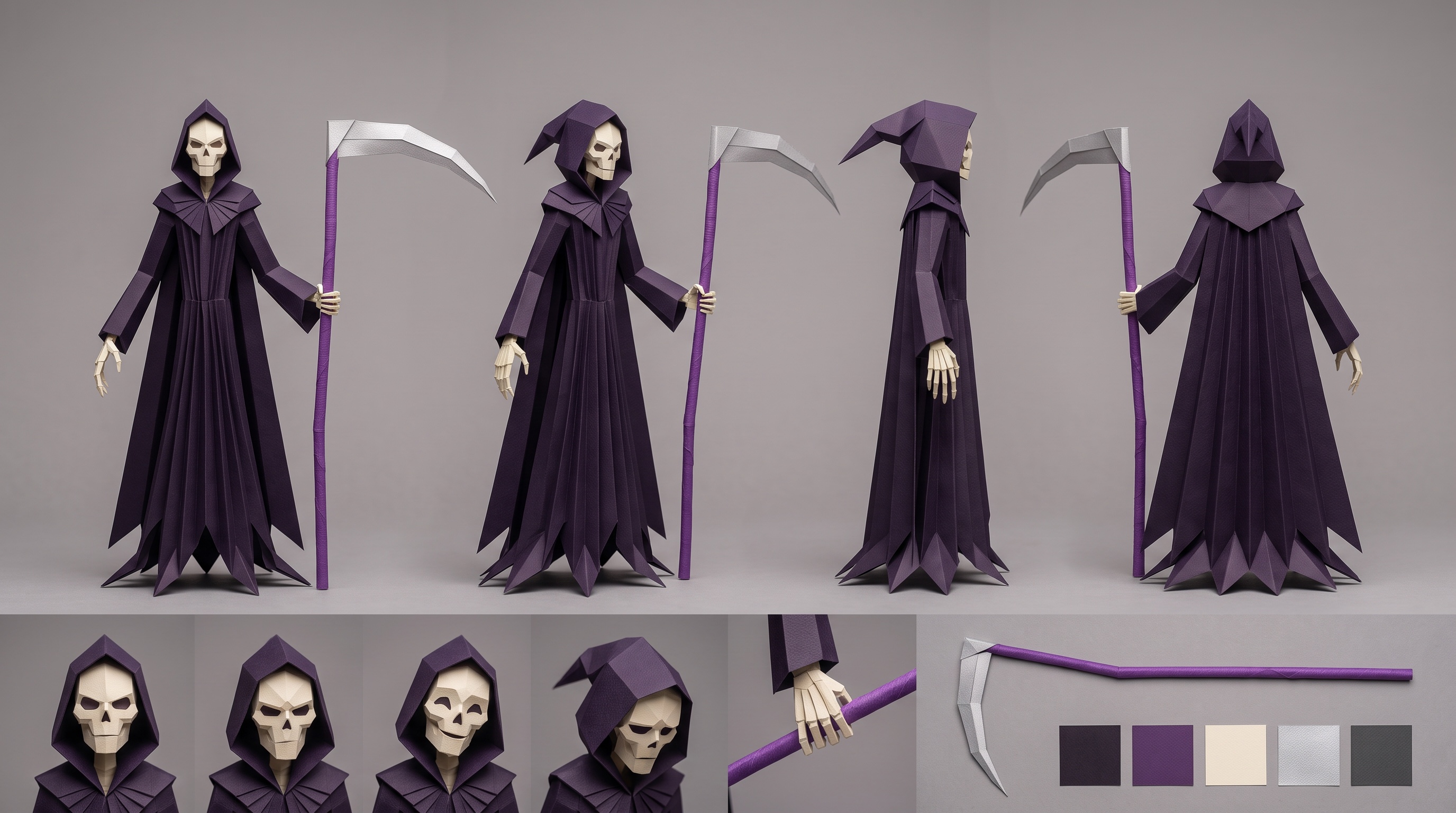
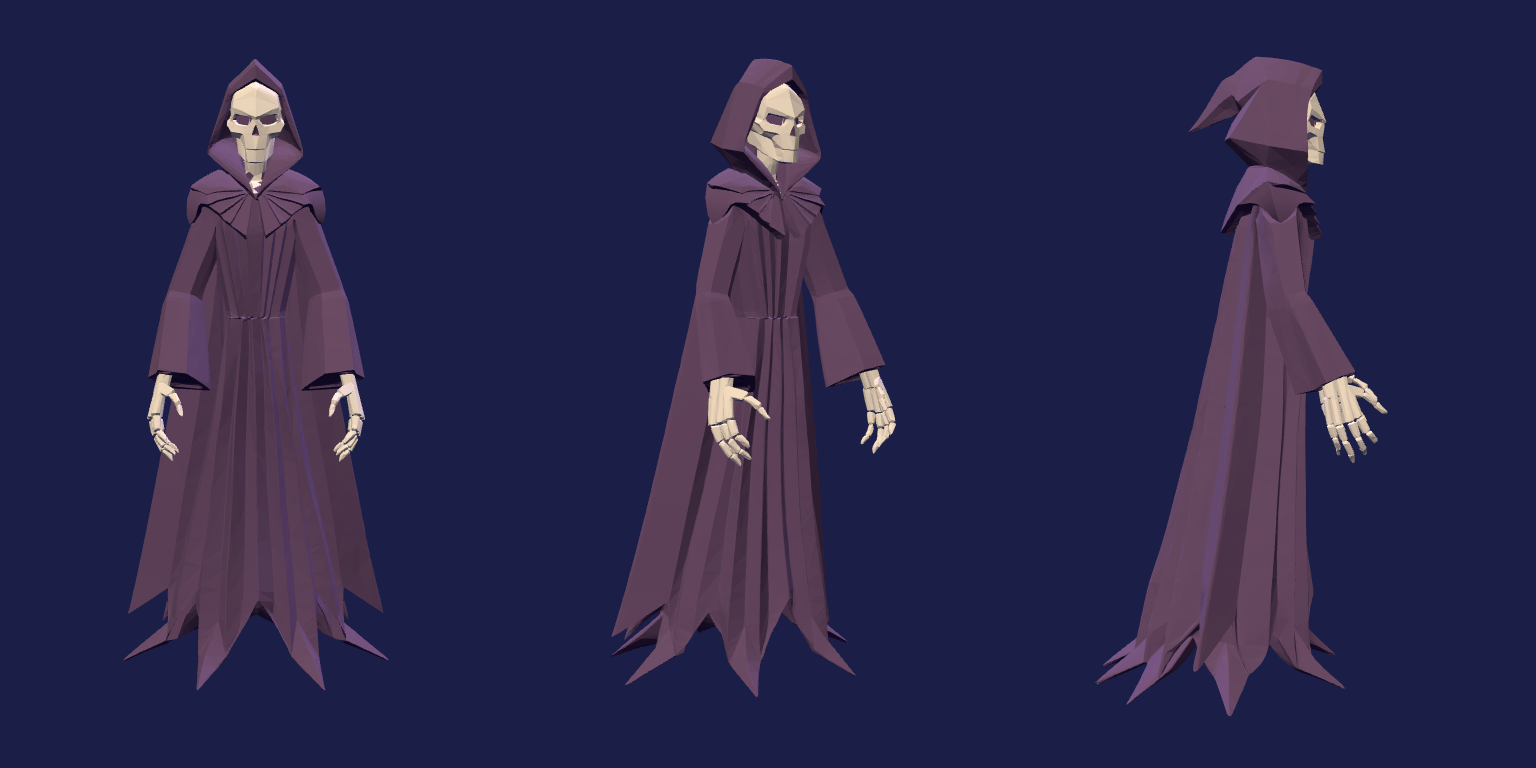
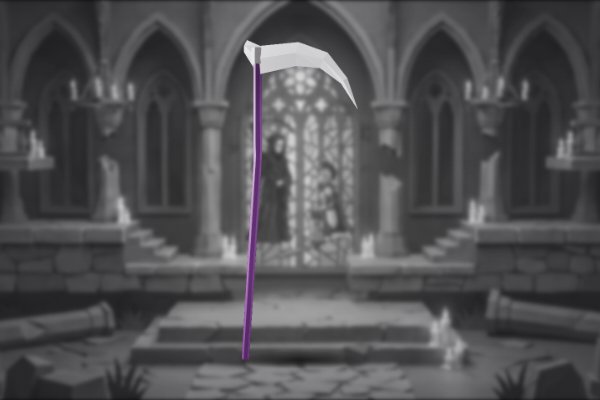
The ending that gives meaning to the rest. Deep violet pleated robe, ivory skull, scythe with a violet handle and a silver blade. She floats: no legs.
Violet on a night-blue world reads poorly: always give her a lighter rim or a light behind.
The hero
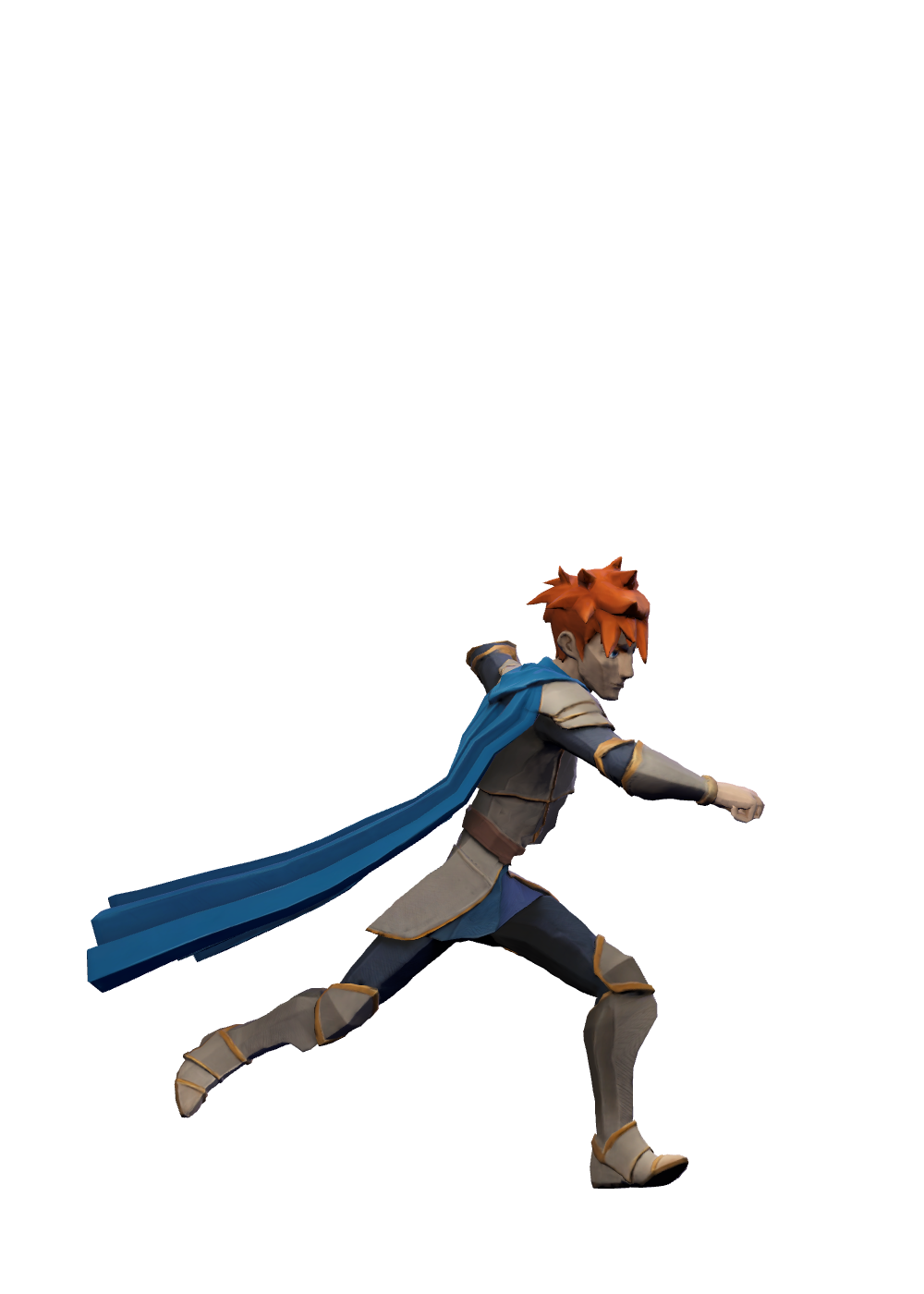
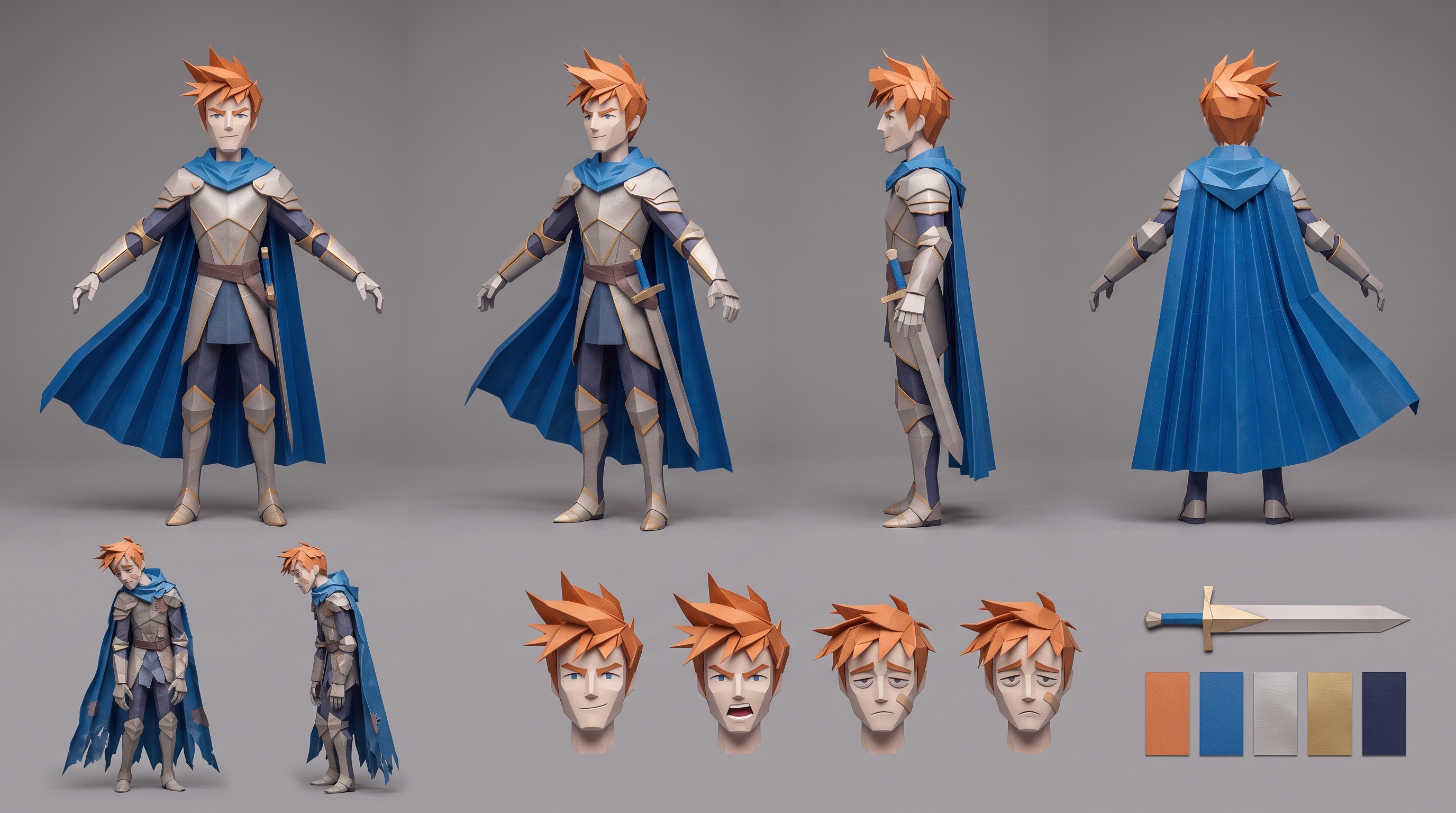
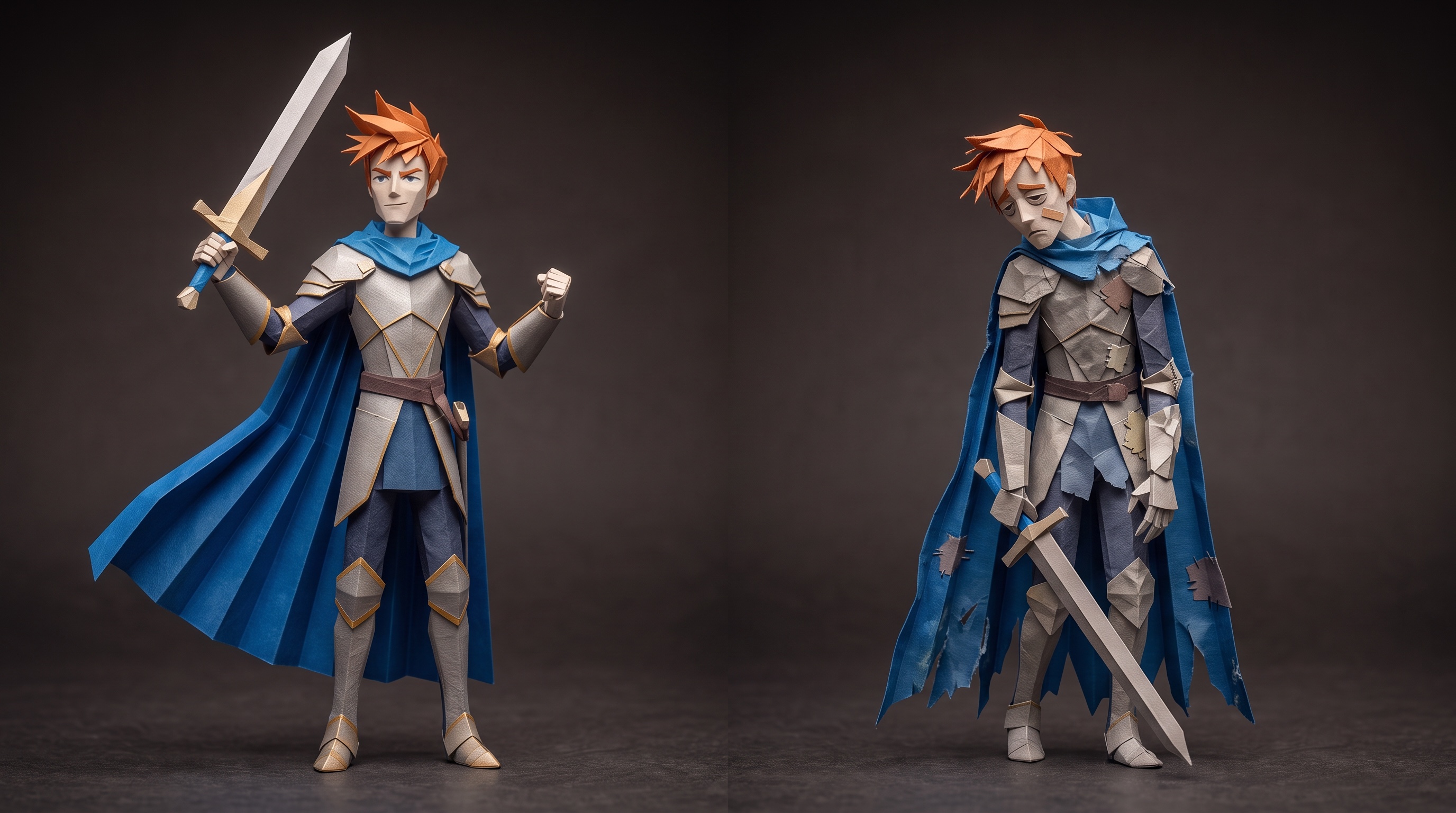
The audience's darling. Normal proportions, orange hair, light armour, blue cloak. In every room he runs from Death, a little more tired each time.
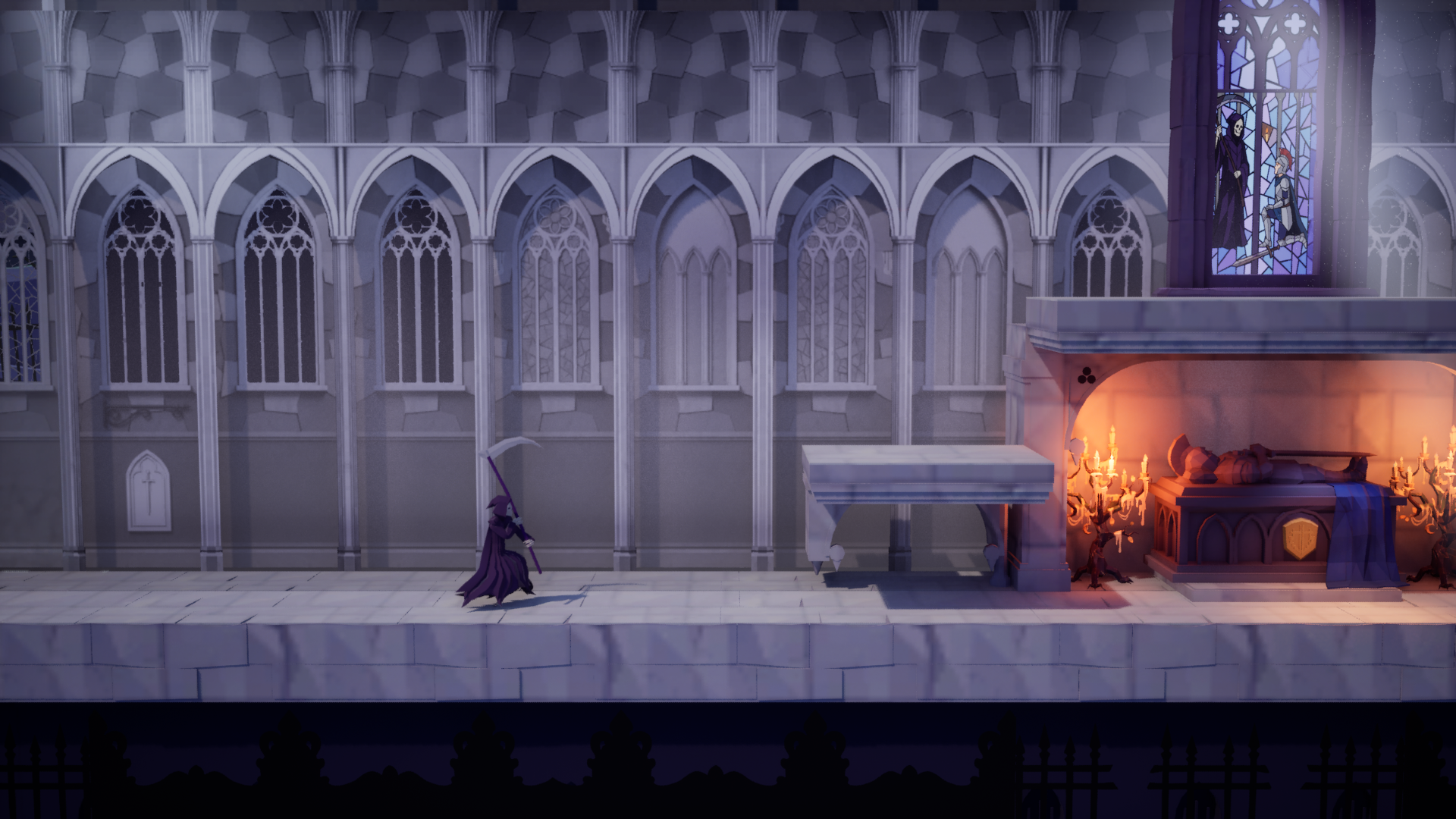
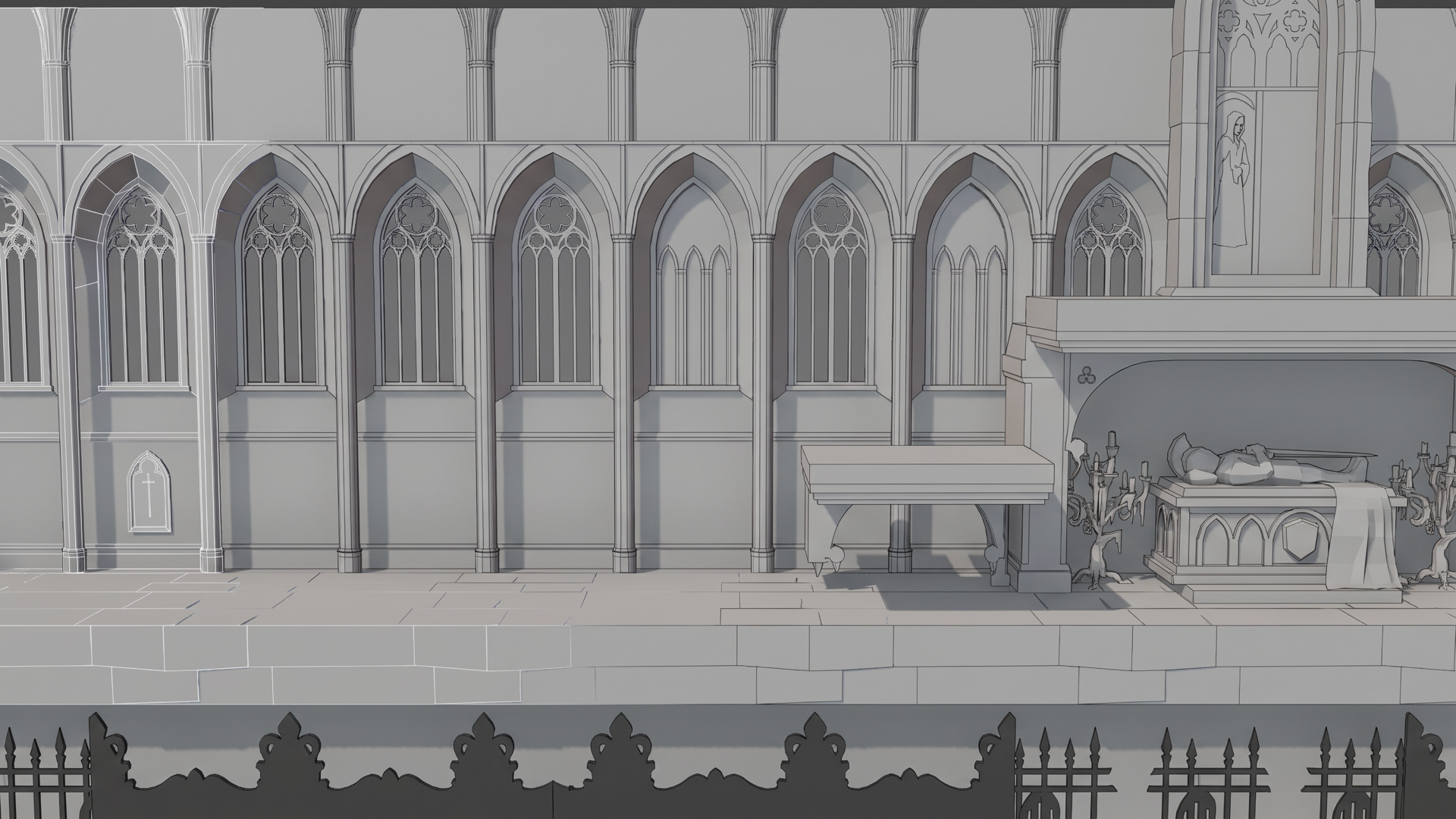
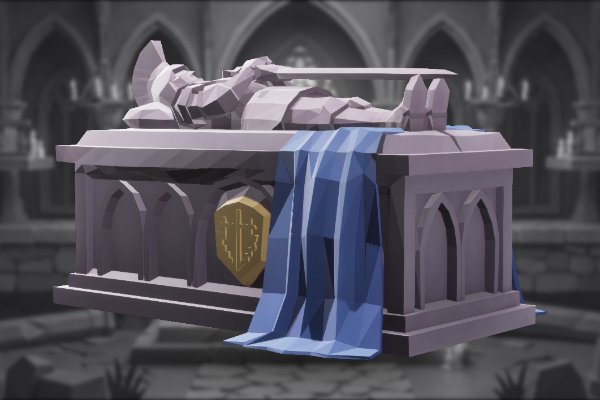
The crypt of the final scene
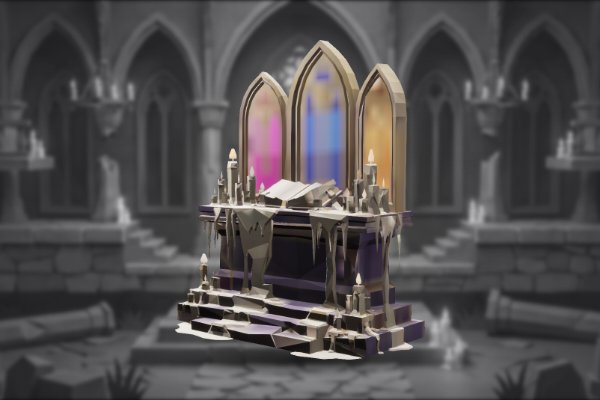
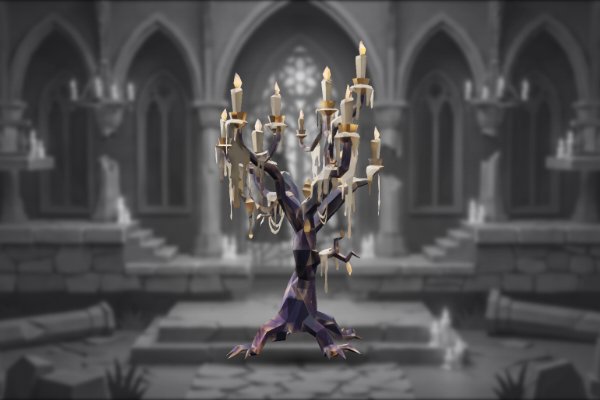
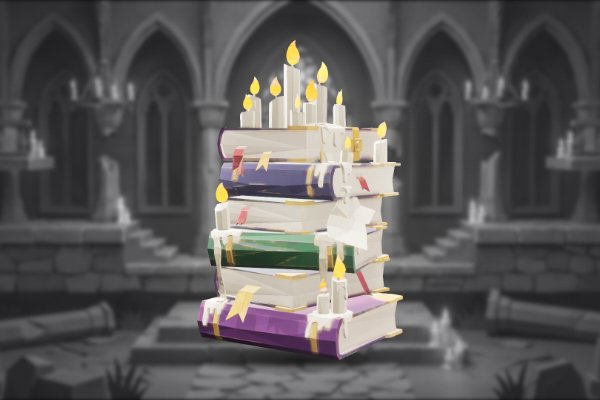
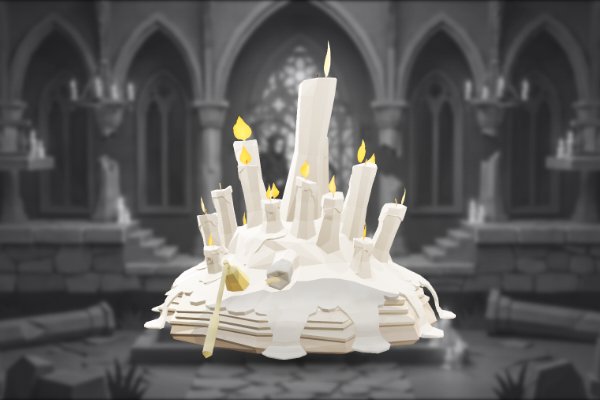
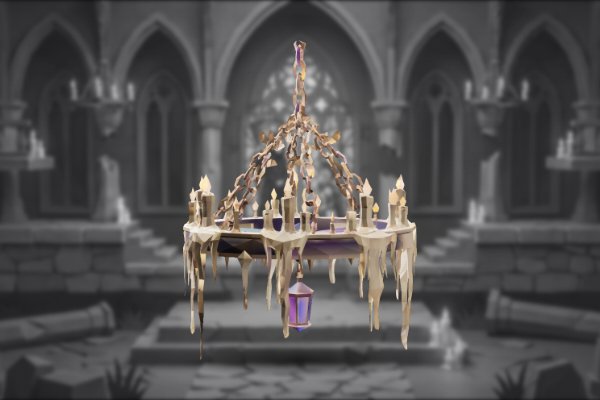
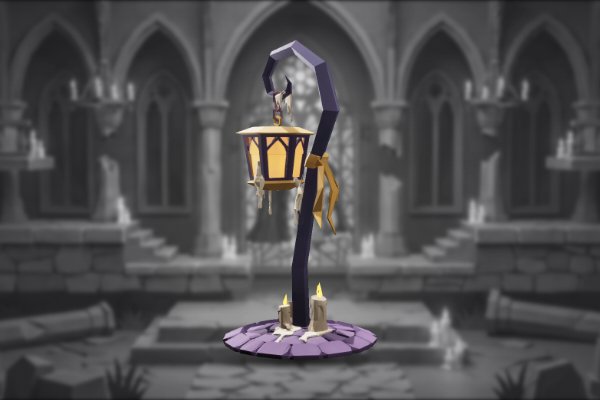
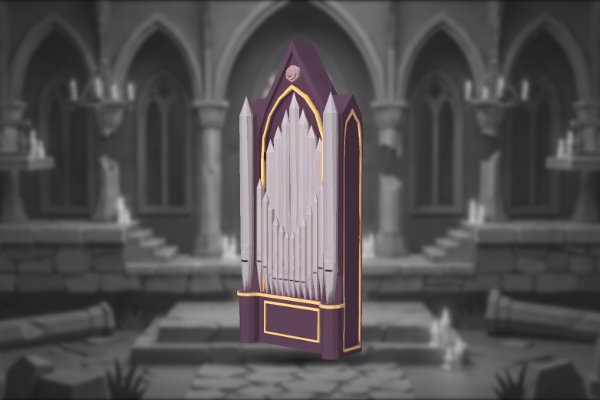
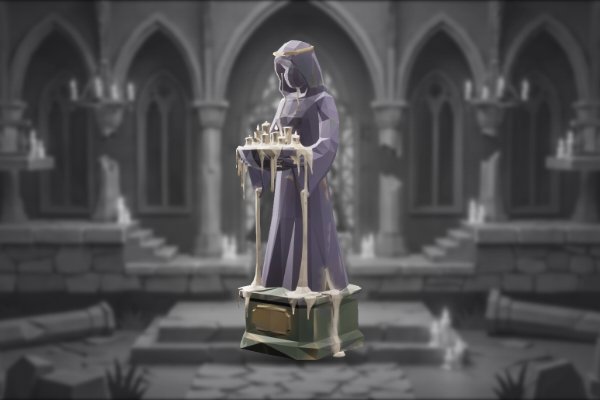
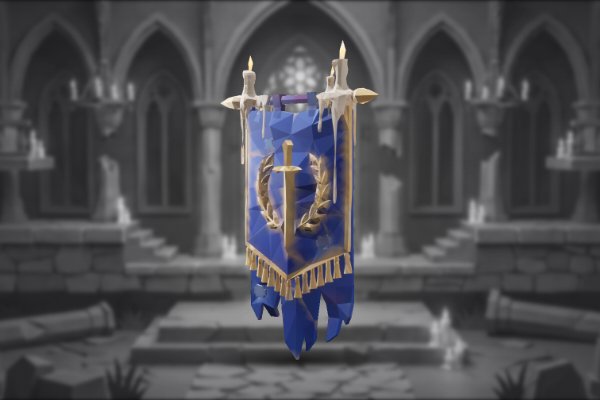
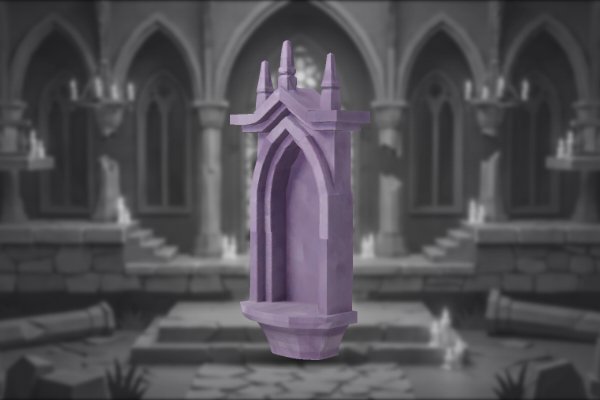
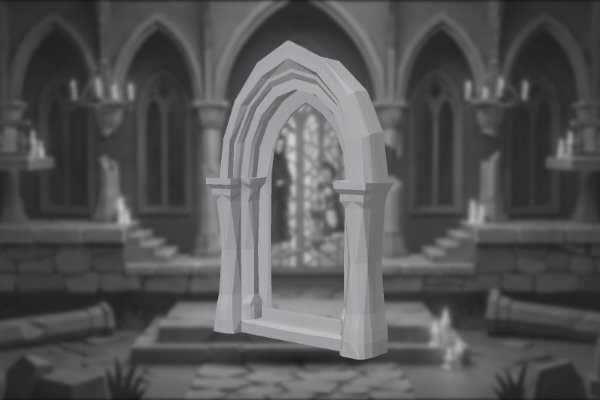
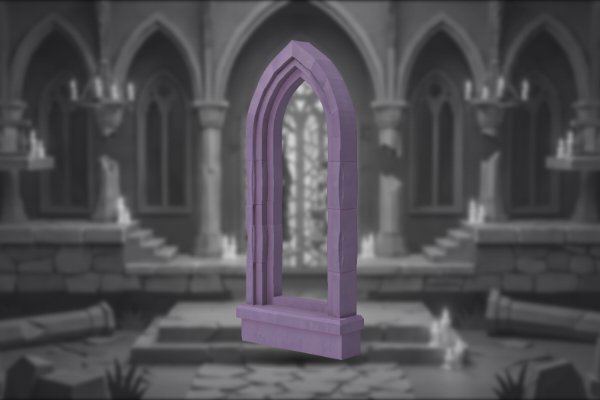
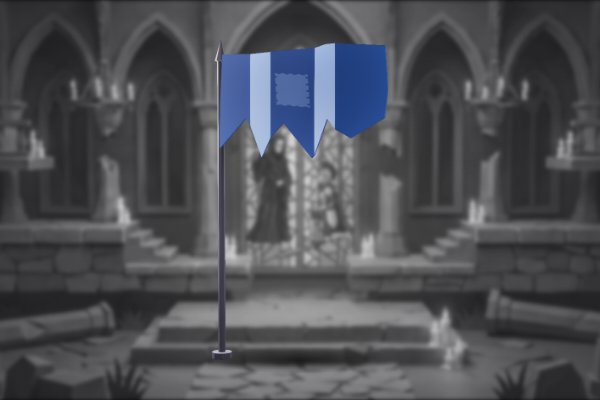
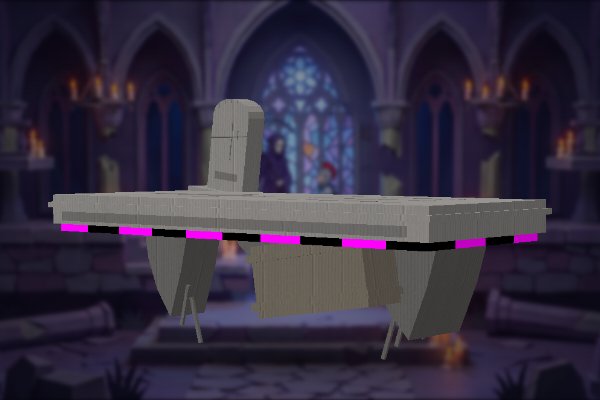
Every model as it is in the game, exported from Unreal, on the start-menu crypt in grey. Each one was generated from an image made for that object alone (three quarters, neutral light, already in paper style), then turned into a model: where we kept that concept, it shows in the corner. Pick a model and orbit around it.
- The hero's tombSM_Sepolcro_Eroe
- AltarSM_Altare
- CandelabrumSM_Candelabro
- Candles on booksSM_Candele_Libri
- Heap of candlesSM_Cumulo_Candele
- ChandelierSM_Lampadario
- LanternSM_Lanterna
- OrganSM_Organo
- StatueSM_Statua
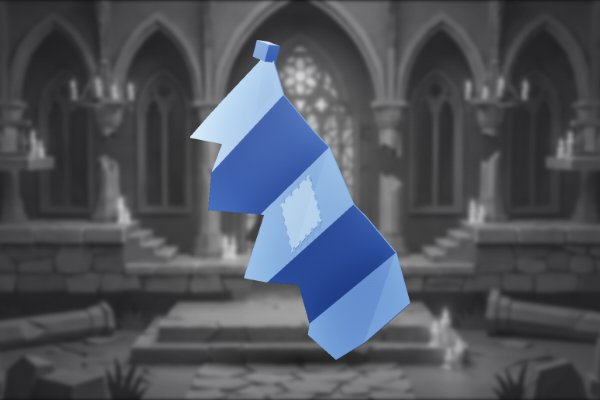
- BannerSM_Stendardo_E
- NicheSM_Nicchia
- PortalSM_Portale
- Window frameSM_Vetrata_Cornice
- Death's scytheSM_Falce
- Cloak shred, flagSM_Mantello_Brandello_Bandiera
- Cloak shred, snaggedSM_Mantello_Brandello_Impigliato
What he builds in a hurry
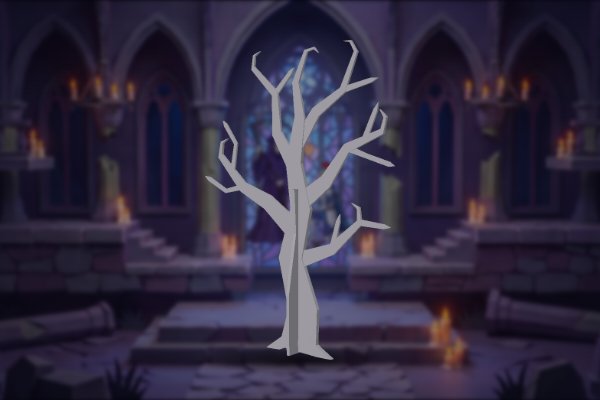
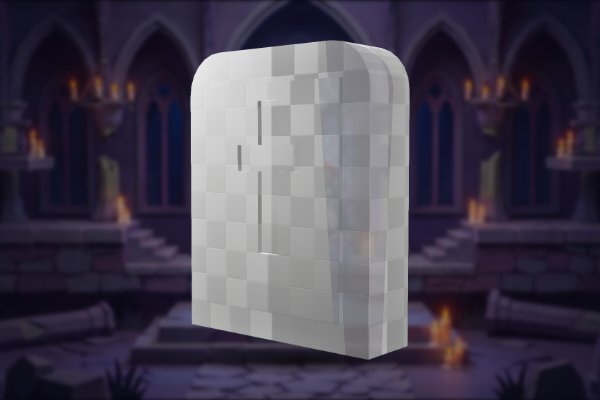
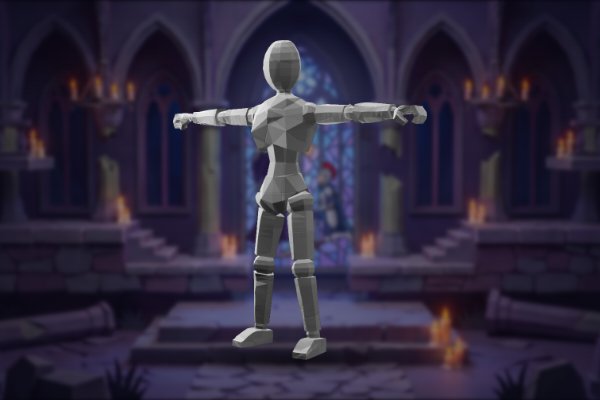
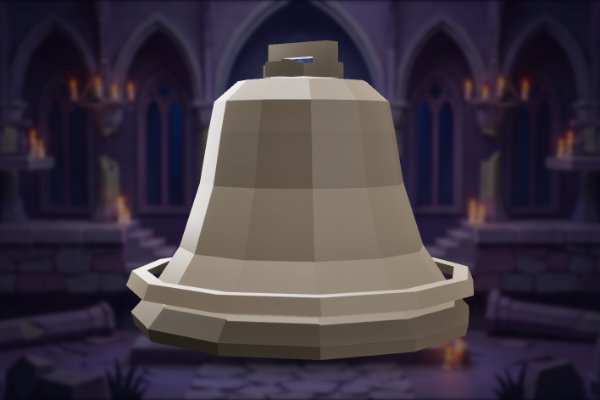
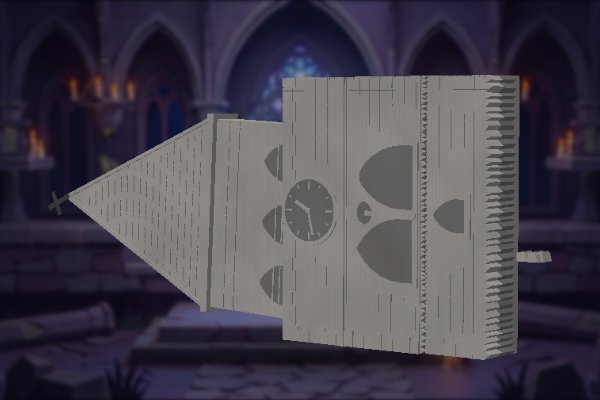
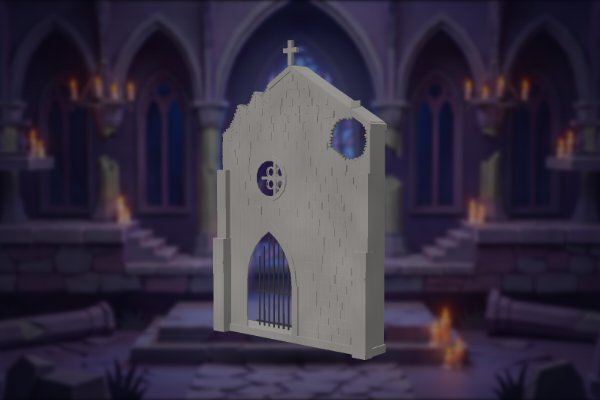
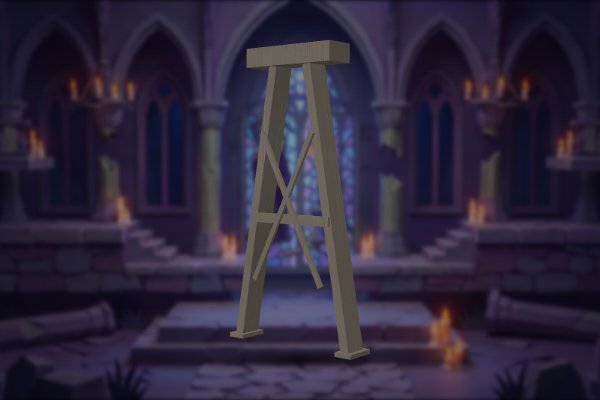
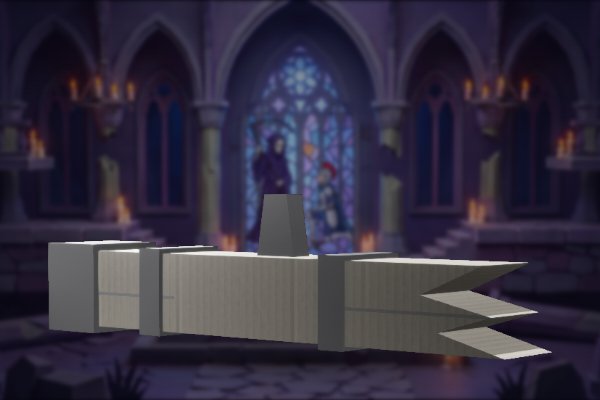
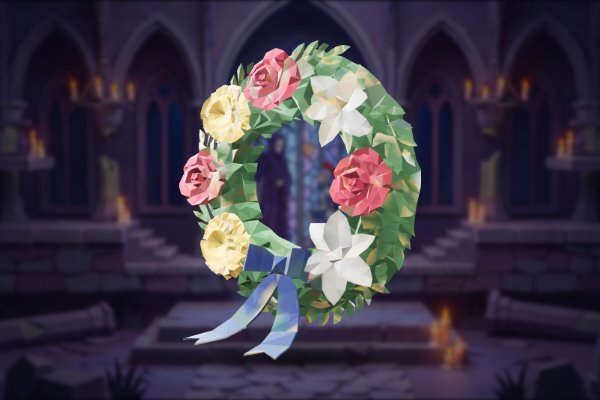
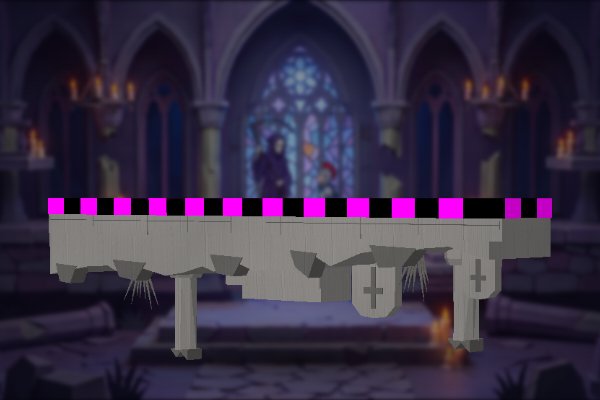
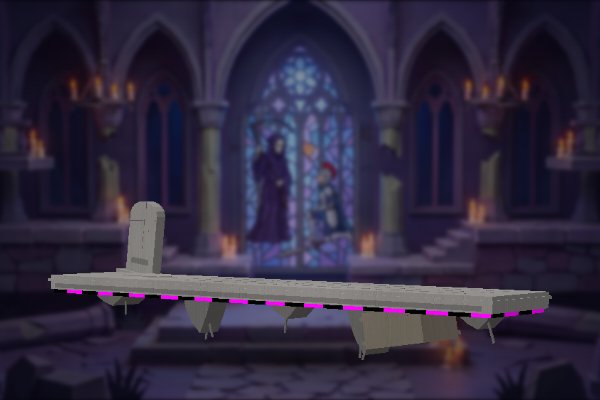
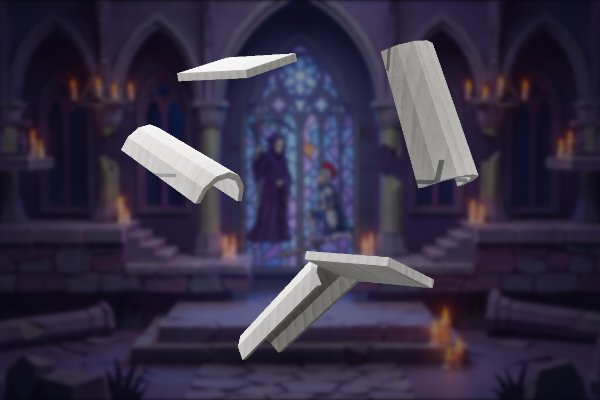
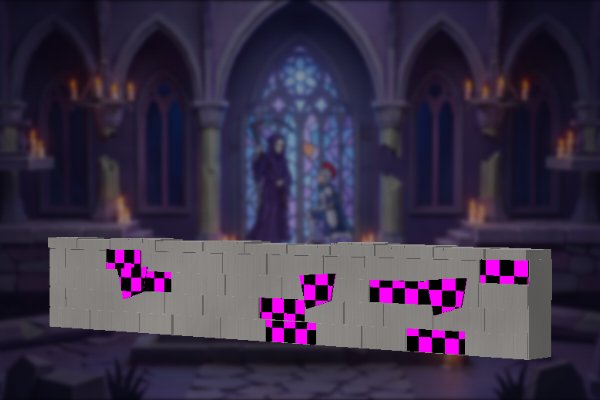
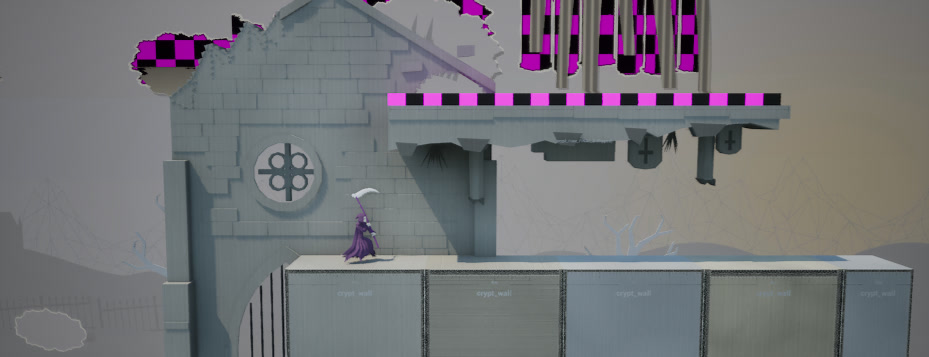
Rooms 2 and 3: objects of the original game copied in a hurry, dummies in T-pose, pieces left unfinished. The magenta checkers are missing textures, on purpose. Here on the start-menu crypt in colour. Pick a model and orbit around it.
- Copied treeSM_Albero_Copia
- Copied gravestoneSM_Lapide_Copia
- T-pose dummySM_Manichino
- BellSM_S3_Campana
- Bell tower, lying downSM_S3_Campanile_Sdraiato
- GateSM_S3_Cancello
- TrestleSM_S3_Cavalletto_200
- Long trestleSM_S3_Cavalletto_400
- StumpSM_S3_Ceppo
- WreathSM_S3_Corona
- Upside-down cryptSM_S3_Cripta_Capovolta
- Tomb slabSM_S3_Lastra_Tombale
- Reward slabSM_S3_Lastra_Premio
- Roof tilesSM_S3_Tegole
- Grave edgeSM_S3_Bordo_Fossa
The world follows his mood
Five rooms were planned, four are in the game. Room 4 is our own director's cut: it stays here as a concept only.
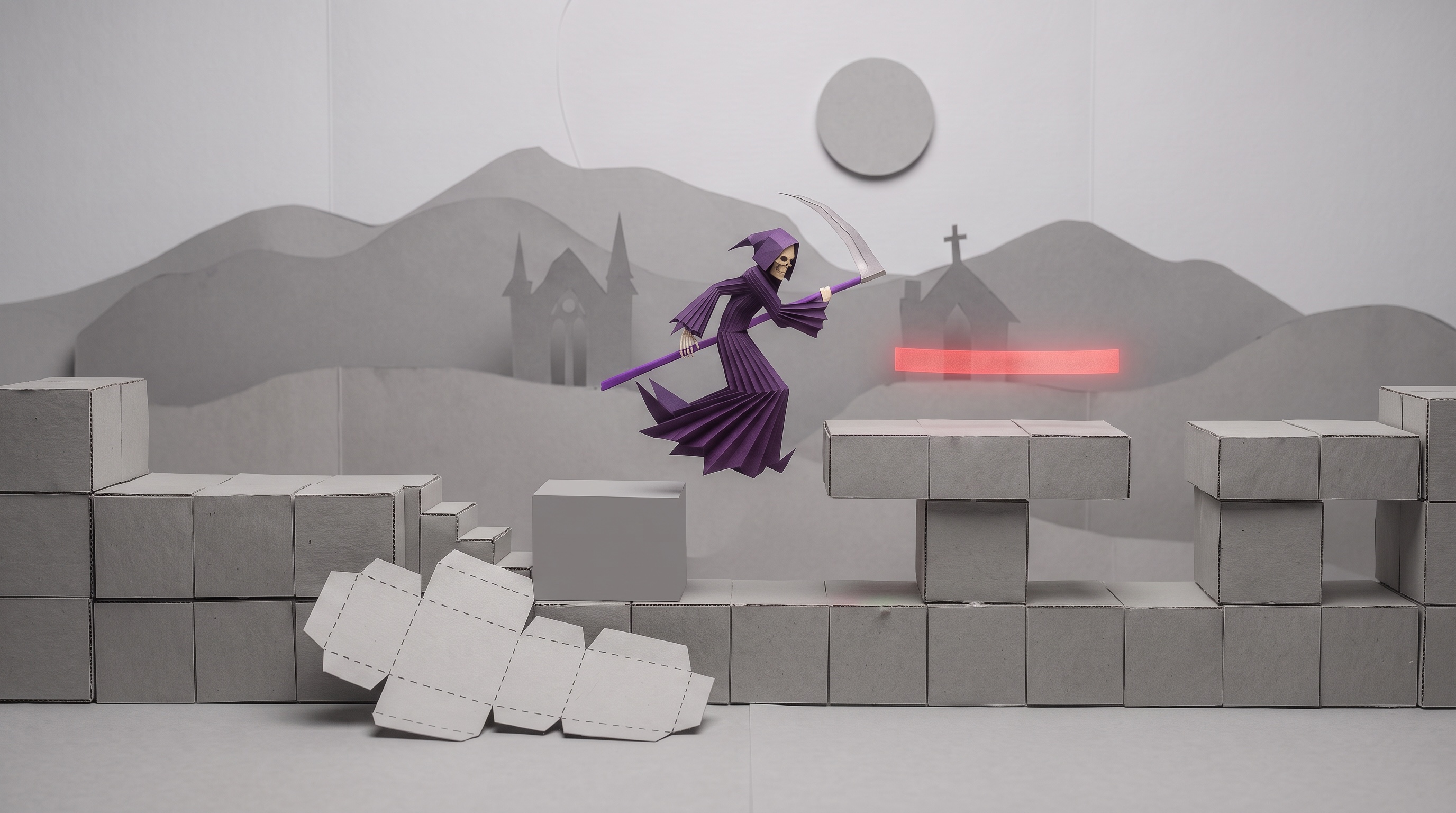
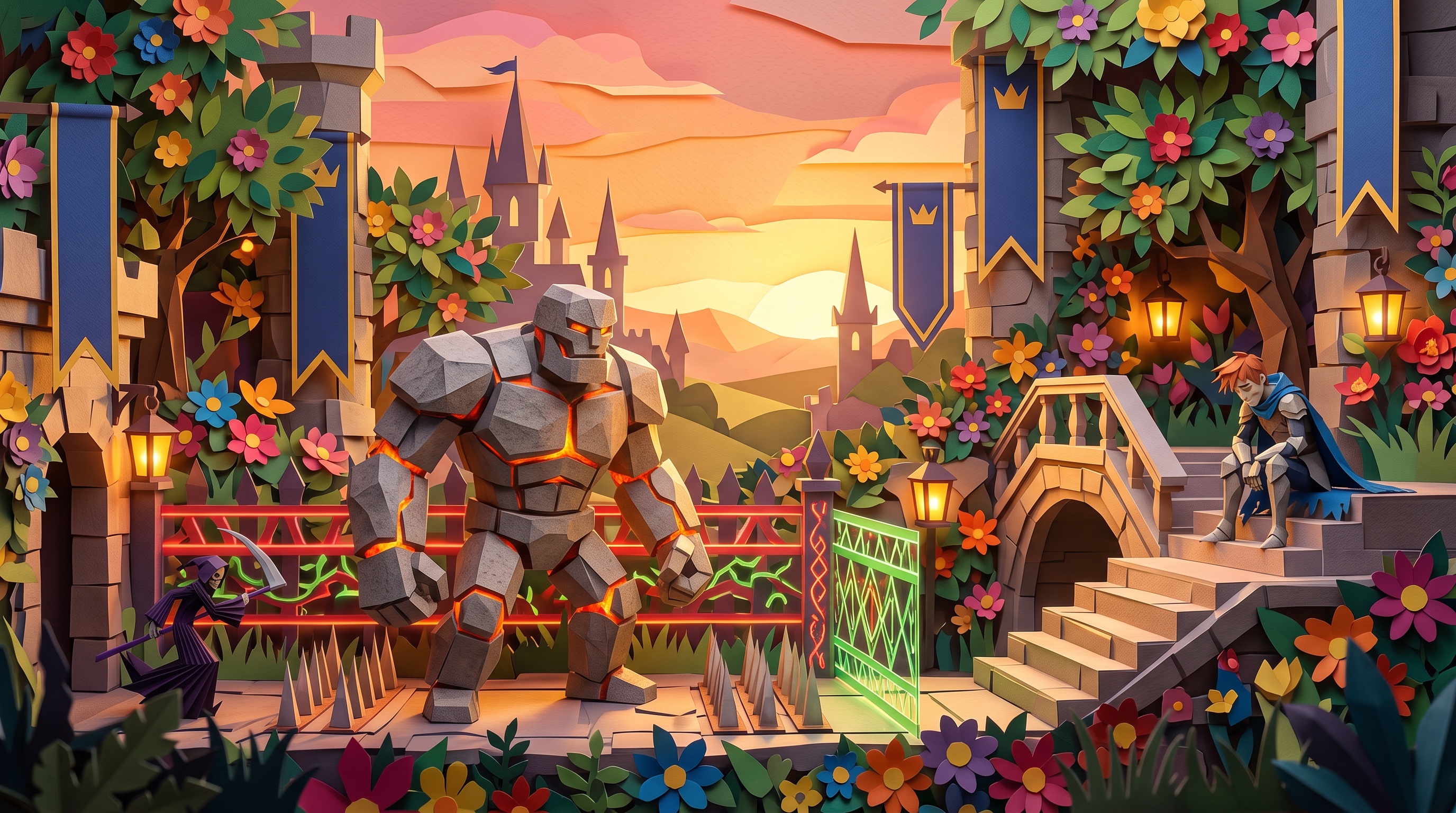
Not in the game. We never developed it: its idea, his defences as your ladder, became the short scythe-only climb at the start of room 5.
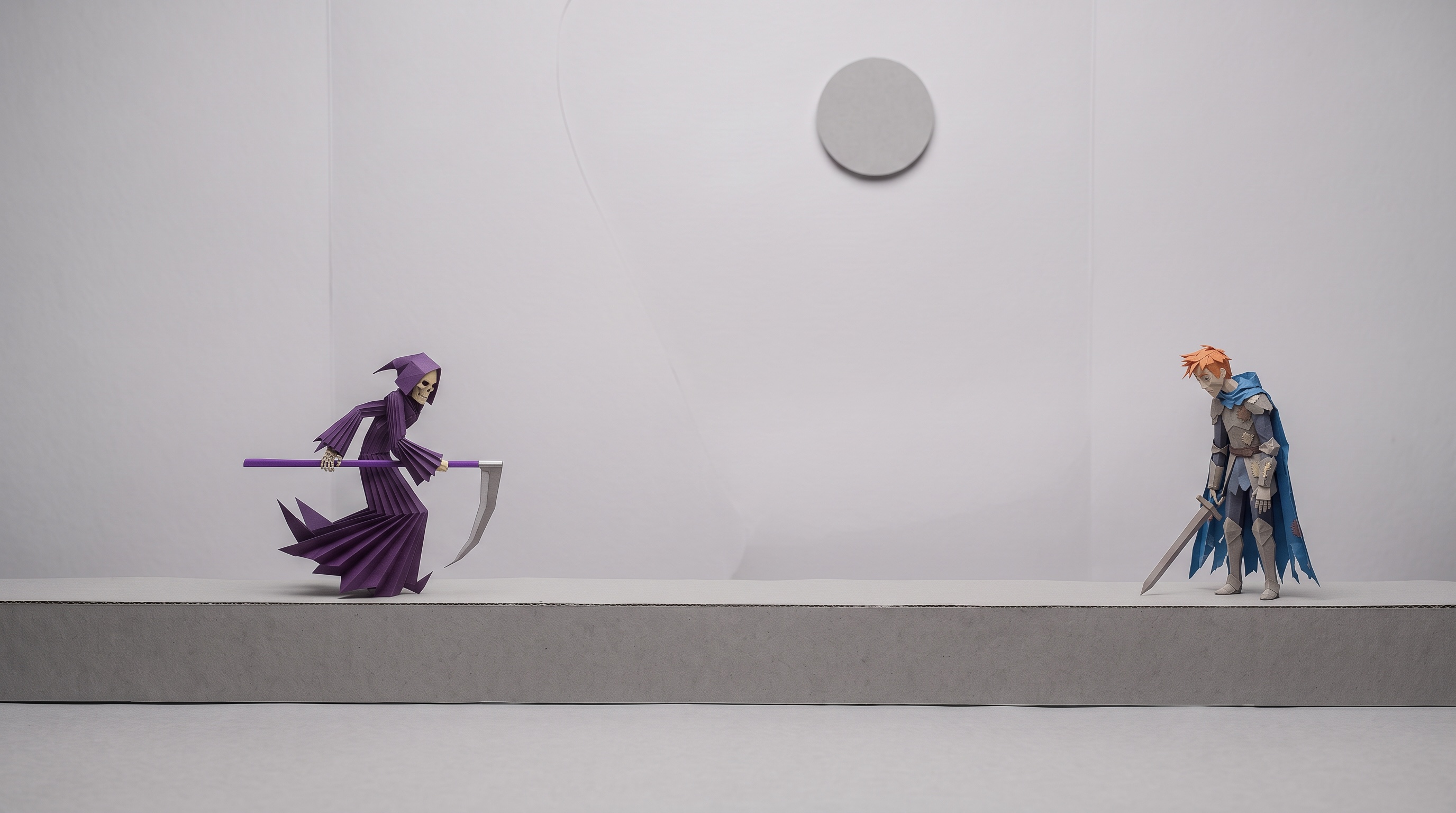
The developer's room
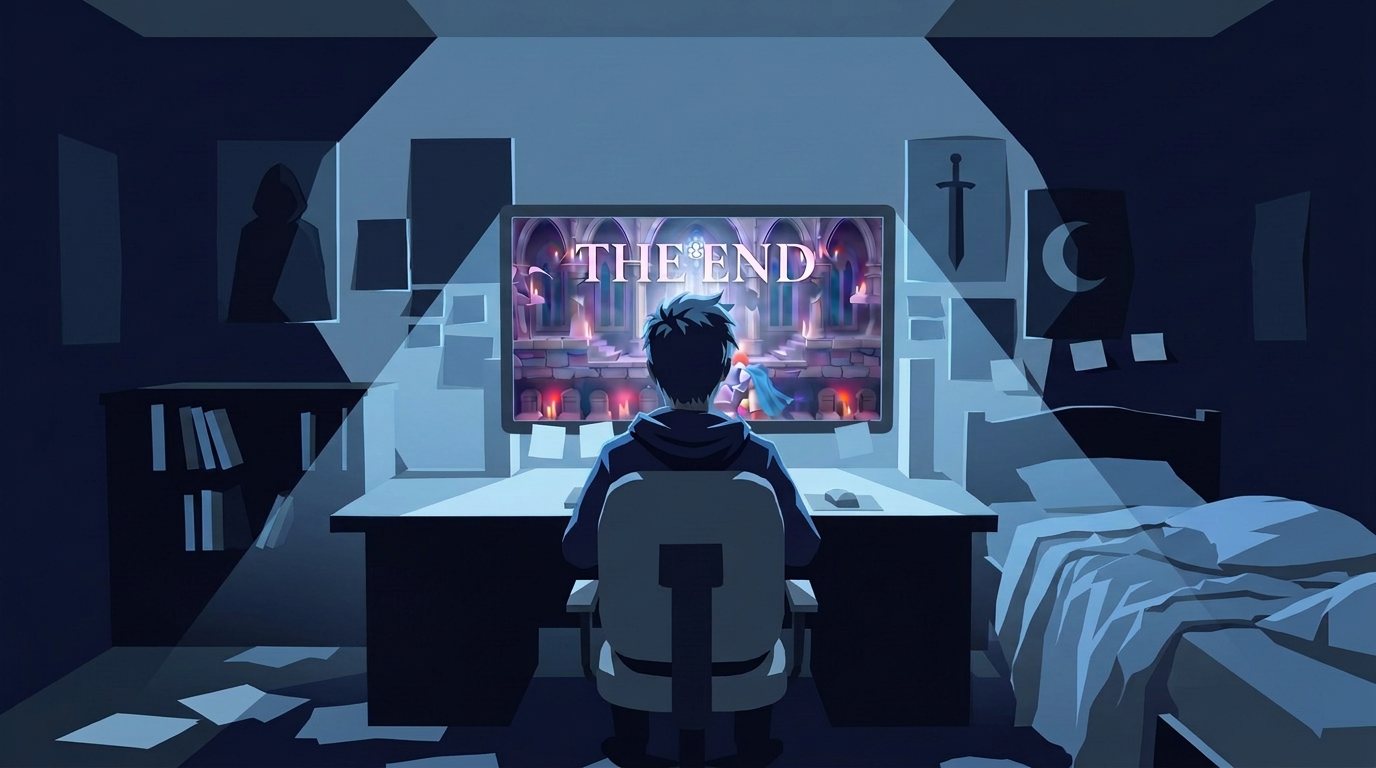
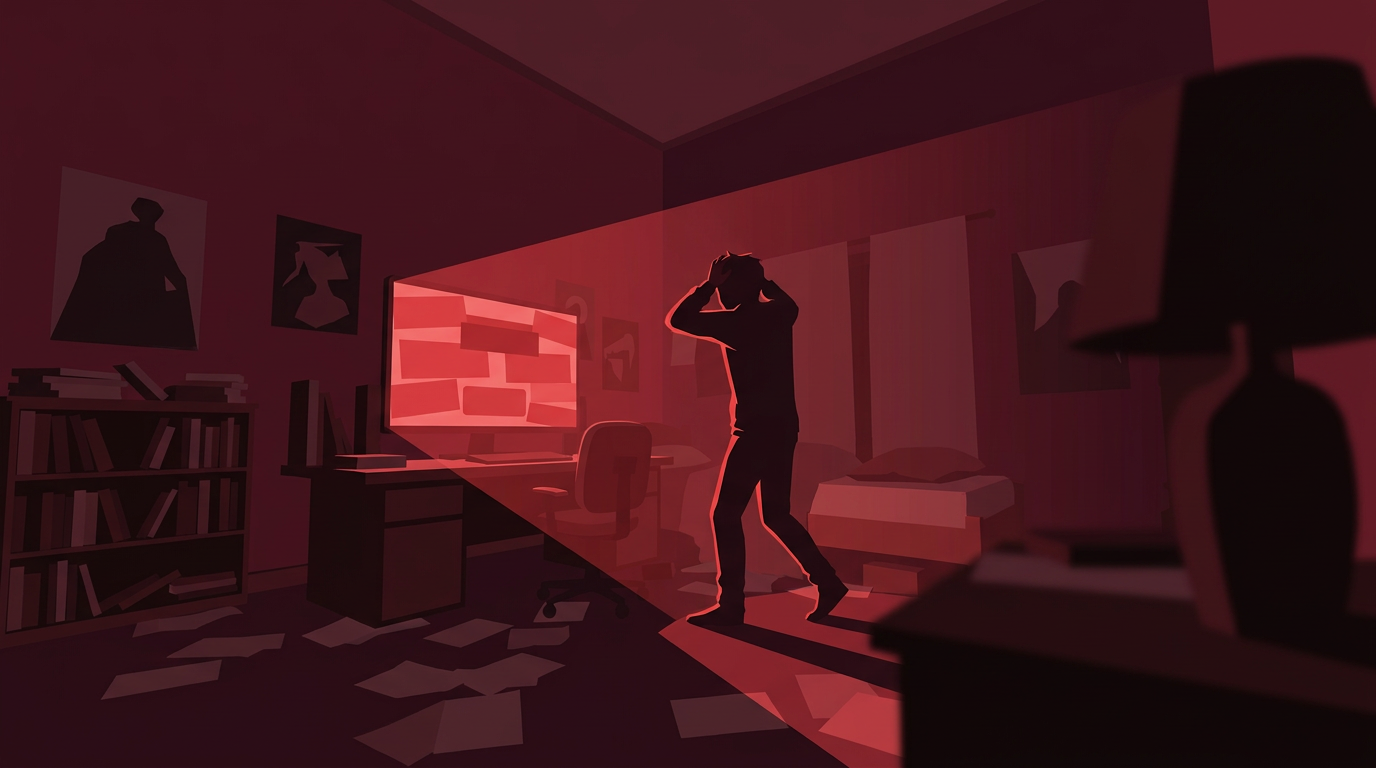
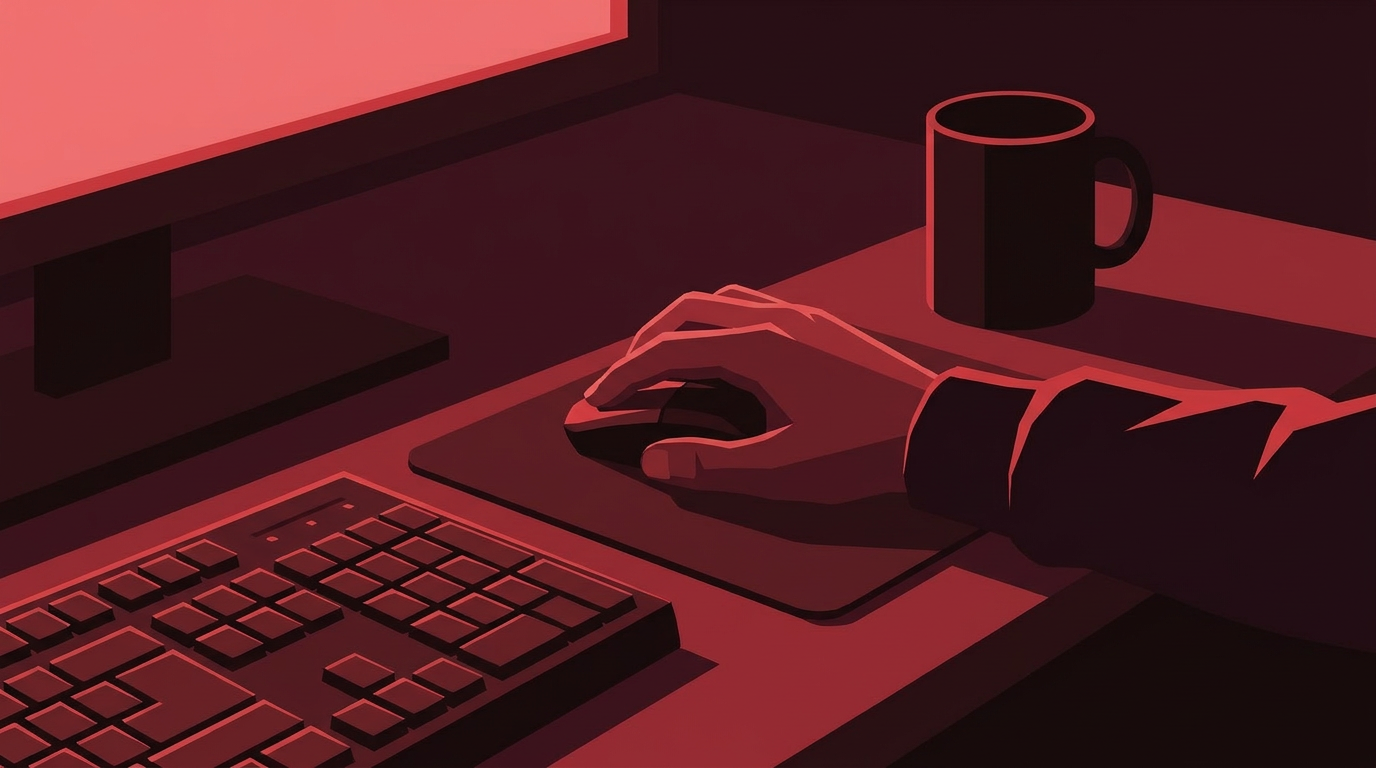
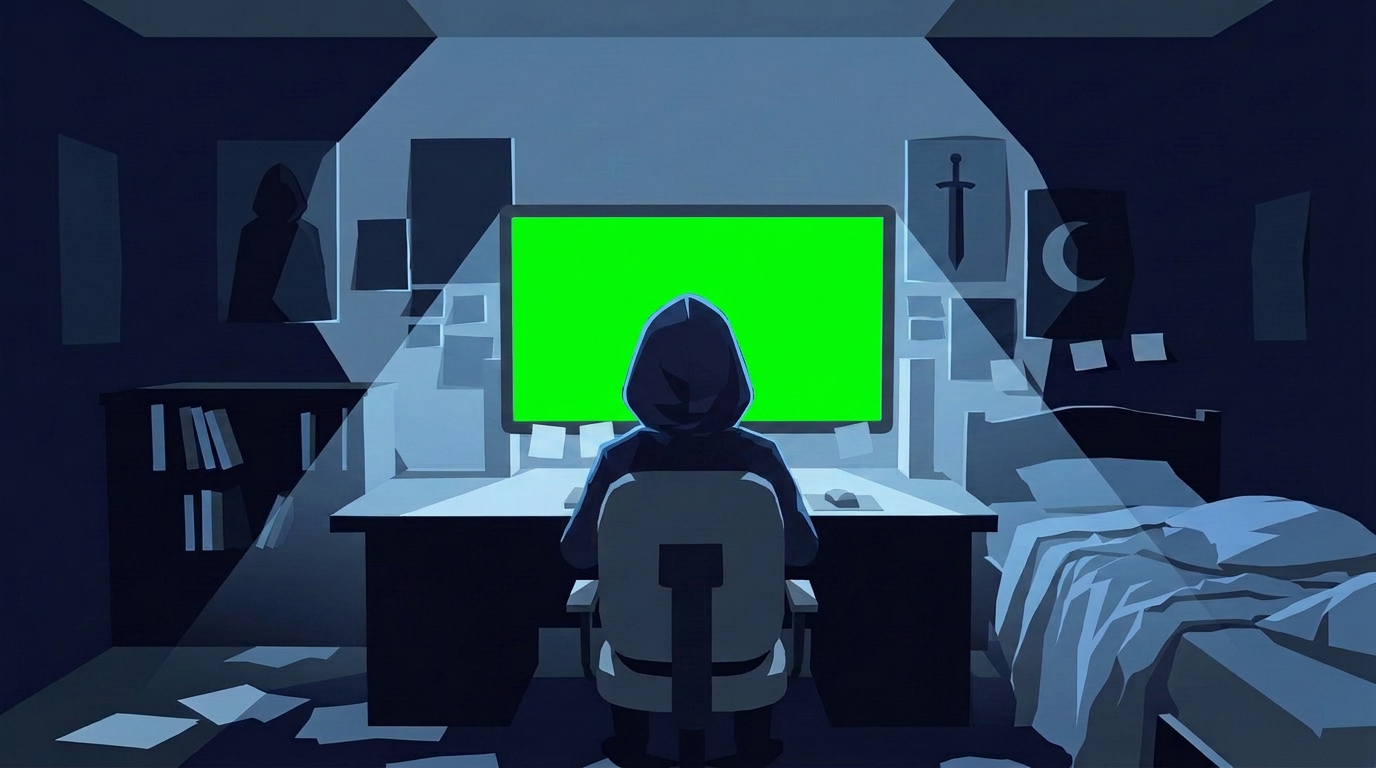
The intro leaves the game for a moment: a flat "2.5D theatre" in ink blue, with the monitor's light as a cone of hard planes. Few details, dark posters with a single silhouette. DEV_ID has human proportions and we never see his face.
Neither realistic nor cartoon. Screens are drawn as code and keyed onto the monitors, so their text stays sharp.
How he talks
The developer talks only through code and comments. Tiny lines anyone can read without knowing how to program. In English, lower case, short, a little guilty.
- Code is an action: floor.remove(), add(wall), level.length += 20.
- Comments are feelings: // sorry, // oops.
- He signs as DEV_ID, never shows his face.
- Errors are the game's voice: Death cannot be removed.
How it sounds
The developer sounds like a desk, the world sounds like a video game, and they never mix. One melody in three moods, and no music in the last room. Pick a sound: it plays with its action.
- Death
- JumpS_Morte_Salto
- DashS_Morte_Scatto
- GlideS_Morte_Planata_Loop
- LandS_Morte_Atterraggio
- HitS_Morte_Colpita
- RespawnS_Ripartenza
- Scythe
- Swing in the airS_Falce_Vuoto_01
- Cut a lineS_Falce_Taglio
- Push after a cutS_Falce_Spinta
- The note of the cutS_Falce_Codice_Nota_01
- Code & level
- Line: removesS_Riga_Tolto
- Line: addsS_Riga_Aggiunto
- Piece goes greyS_Pezzo_Grigio_01
- Piece goes wireframeS_Pezzo_FilDiFerro_01
- Piece unloadedS_Pezzo_Sparito
- Piece restoredS_Pezzo_Ripristinato
- Low gravity zoneS_Zona_Leggera_Entra
- Heavy gravity zoneS_Zona_Pesante_Entra
- The door runs awayS_Porta_Scorre
- End-of-room doorS_Porta
- CheckpointS_PuntoDiRipresa
- Hero stepS_Eroe_Passo_01
- The developer's desk
- KeyS_Tasto_01
- EnterS_Tasto_Invio_01
- CommentS_UI_Commento_01
- ErrorS_UI_Errore
- Music
- Theme, fullS_Musica_Pieno_Loop
- Theme, strippedS_Musica_Spoglio_Loop
- Theme, tenseS_Musica_Teso_Loop
- CrescendoS_Musica_Crescendo
- ClosingS_Musica_Chiusura
- Start menuS_Menu_Fondo_Loop
- End creditsS_Musica_Titoli_Attacco
Death · Scythe · Code & level · The developer's desk · Music: 33 sounds exported from the game, each with its action. Interactive in the HTML version.
Take it with you
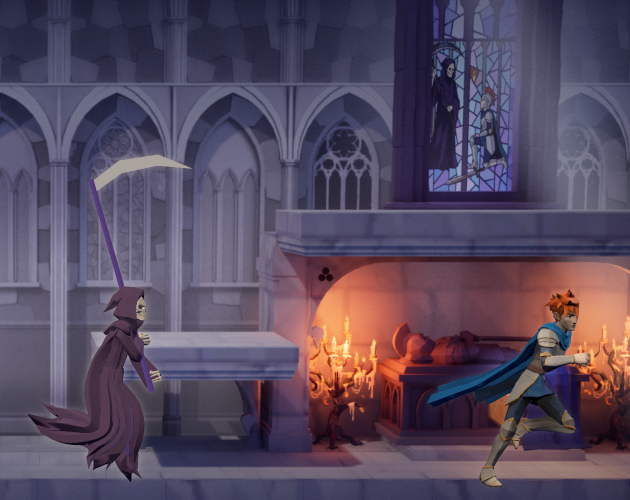
Click a card to download it. Hover the logo and the cover to see them move.
On itch.io
Players hated the ending of Kill Your Darlings: the hero dies. The developer shipped Patch 1.1 to take Death out of the game. You are Death, the ending he cut.
Behind you he deletes the level. Ahead of you he writes code: red removes, green adds, yellow changes. One scythe, one swing: cut the line, undo the change.
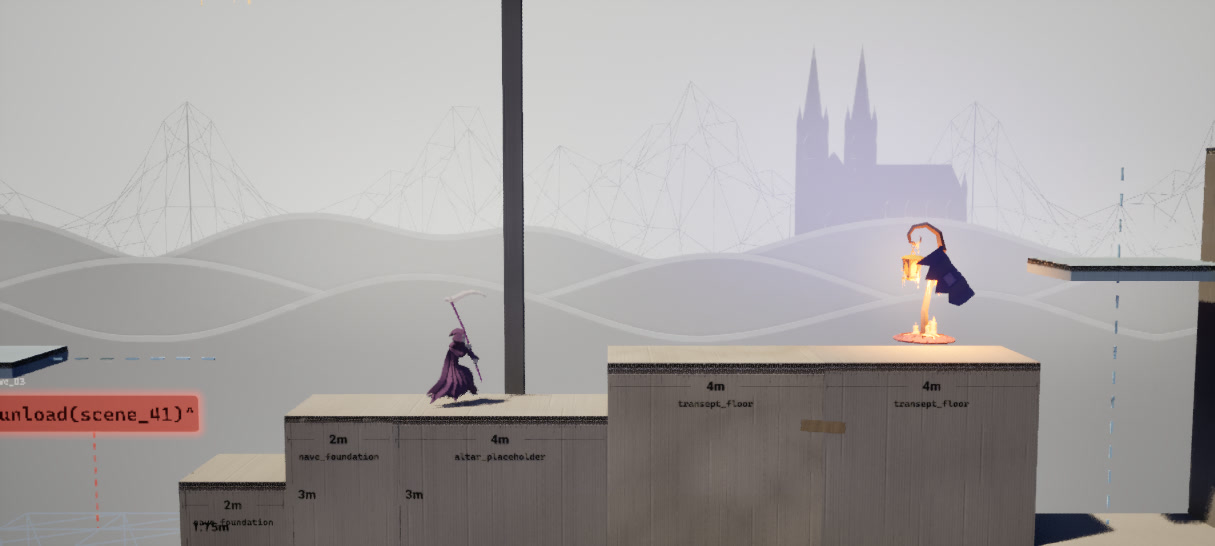
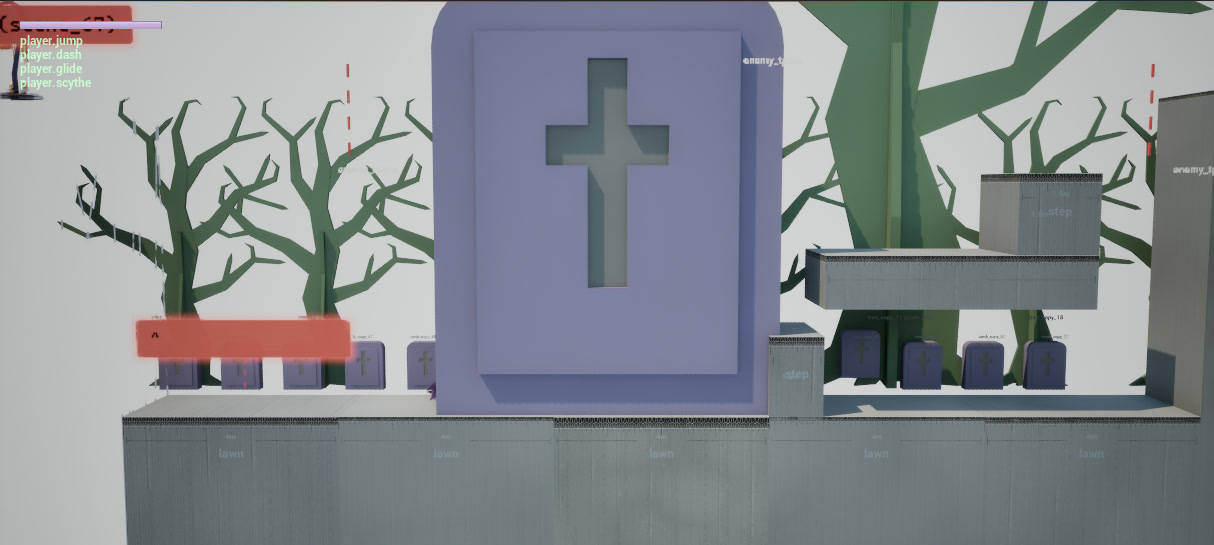
 Save Your DarlingsYou are the ending he cut.
Hover the cover in the list: on itch it animates the same way.